 Bilatzailea


The history of writing is about 40,000 years ago
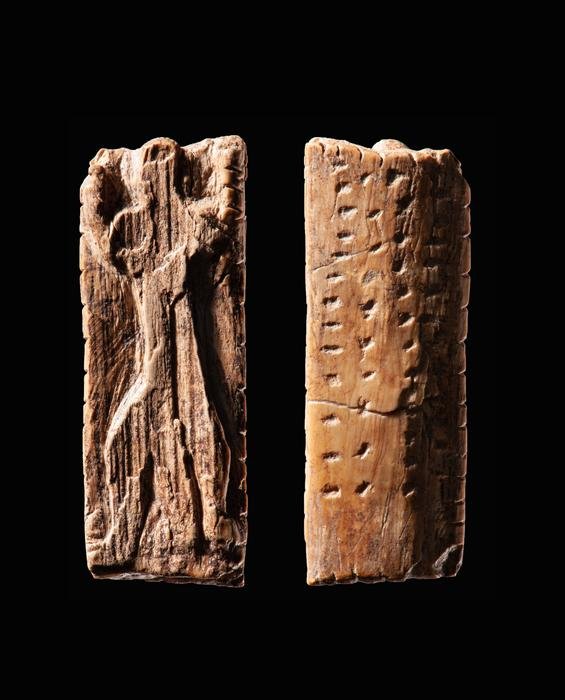
About 40,000 years ago, the sapiens carved signs into instruments and sculptures. Now, through a new computational analysis, they have confirmed that the complexity and information density of these signs is similar to those of the earlier protocuneiform writings. This is a significant finding, since protocuneiform writing appears in the tables of Mesopotamia and was used about 5,000 years ago, that is, tens of thousands of years later.
To reach this conclusion, researchers have analyzed 260 objects from 34,000 to 45,000 years old that are stored in museums. The objects are represented by about 3,000 signs: lines, points, crosses. One of these objects is, for example, a plaque found in the Swabia Jura (Germany). Known as the Worshipper , he is 37,000 years old and is made with the fangs of a mammoth, on one side he has a sculpted anthropomorphic figure and on the other he is full of points and indentations.
Computational analysis
Through computational analysis, they have discovered that the sequence of signs has nothing to do with current writing systems that reproduce speech. However, the density of information they store is similar to that of the protocuneiform tables of Mesopotamia. Also in this writing the signs were repeated with a frequency similar to that of the Paleolithic objects. Another similarity that the researchers have pointed out is that both the Paleolithic objects and the Mesopotamian boards were of such dimensions that they could be carried in hand.
“Even in that writing the signs repeated themselves with a similar frequency to those repeated on Paleolithic objects.”
Researchers are unable to clarify the meaning. Now, in the analysis they have used, they have used quantitative linguistics, statistics and machine learning algorithms, and they have shown that they could predict the next sign. They have no doubt, therefore, that it was a code whose purpose was to transmit information. The study was published in the open journal PNAS .
Buletina
Bidali zure helbide elektronikoa eta jaso asteroko buletina zure sarrera-ontzian