 Bilatzailea


German mathematician Gerd Falstings has been awarded the Abel of 2026
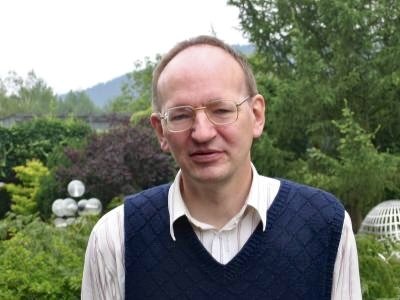
The Abel Prize is one of the two highest prizes in the field of mathematics. One is the Fields Medal, awarded every four years by a mathematician under 40 years of age, and the other is the Abel Award. Gerd Falstings has won two awards: He also won the Fields Medal in 1986 and, this time, the Abel Award. It also won both awards for the same research.
in 1983, Gerd Falstings demonstrated an idea that had been proposed 60 years earlier. A mathematician named Louis Mordell suggested that a genus curve larger than 1 in the Q field of rational numbers has only a finite number of rational points.
The language is very precise, very precise mathematically, but for most people it is almost incomprehensible. It's an idea about number theory, which is the basic math of numbers that we all learned in school. The basic rules of addition, multiplication, reproduction and repetition of numbers are simple, but their combination immediately generates complex problems.
Remember the Pythagorean theorem? The squares of the catheters and their sum and the square of the hypotenuse? It is an example of such a combination. But instead of using the squares of the catheters, using cubes (the catheters instead of three), or making flat rods, he created a famous theorem that could not be proven for almost 400 years, for example.
In many cases, tests and solutions come through tricks. For example, the number pi, whose value can be simulated with a division of the two integers and obtained with great precision, but it is not possible to give a very precise value in this way. Well, it's very important to know that's impossible. It is the task of mathematicians, in addition to calculating pi, to prove this impossibility.
Gerd Falstings did something similar for a very important general case: for a genus curve larger than 1 in the Q field of rational numbers, as the theorem states. And he has not demonstrated the impossibility of seeking solutions, but using an interesting trick of mathematicians, that is, using diophantic numbers, he has shown that there are no infinite solutions. There are only a few. We have returned to the difficult language, but of course, current mathematical research studies concepts with a very high level of abstraction.
And all this what? Why is something like this rewarded with 7 and a half million Norwegian crowns? approximately 670,000 Euro. This amount reflects the importance of mathematical research. What Gerd Falstings has researched is not just a part of number theory, it is a part of arithmetic geometry, whose field of application is extremely broad. Proof of this is the award he has received.
Buletina
Bidali zure helbide elektronikoa eta jaso asteroko buletina zure sarrera-ontzian