 Bilatzailea


FemSTEM
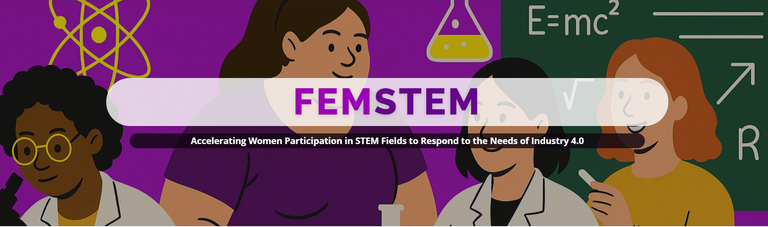
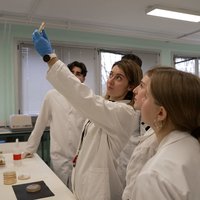
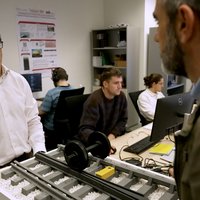
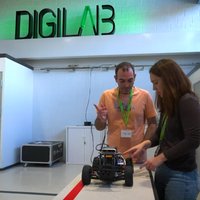
For two years, a group of women scientists from the UPV/EHU has been working on the FemSTEM project together with European partners. The result has recently been released and made available to everyone. Among other things, they have created educational tools, audiovisual materials, mentoring networks and resources with the aim of accelerating women’s participation in the STEM field, making their talent visible and breaking down stereotypes that exclude young girls from the STEM field.
The project, in which teachers and researchers from different disciplines have collaborated, has asked the magazine Elhuyar to answer two basic questions: why it is important that there are women in the STEM field, on the one hand, and why there is a gender gap and what can be done to close it. Nahia Idoiaga Mondragón and Inge Axpe Saez answer the first question and Esther Acha Peña and Eva Epelde Bejerano answer the second. All four agree that the presence of women in the STEM area is essential to generate better knowledge and an integrated response is needed to close the gender gap in the STEM areas.
Why is it important that there are women in the STEM field?
Wish Idoiaga Mondragon
Inge Axpe Saez
Doctors in psychology
Science, technology, engineering and mathematics (STEM) are not just disciplines; they are frameworks for understanding society, defining problems and imagining the future. Therefore, the low presence of women in the field of STEM is not a coincidence, nor is it a phenomenon that can only be explained through personal interests or individual capacities. On the contrary, it is the result of a long process of socialization and education in which both explicit and implicit messages directly influence one’s own identity and possibilities. Although it may seem naive, let’s think about what we have bought from the children around us during these Christmas times. From an early age and without realizing it, we promote the training of boys in constructions, spatial and mathematical skills, and girls in care, relationships and personal image. How can they not feel more comfortable in this context from early childhood and, consequently, choose later those areas that have been trained for hours through play: those of science more often boys; those of language and social area of girls?
From psychology and education we know that professional identity does not arise from scratch. The self-concept of children and young people, their expectations and their answer to the question of “who am I for this” are built in the social context. We know that girls no longer value themselves as smartly as boys at 6 years old, and this difference will only increase if the conditions, patterns and messages of the context are not changed. The discourses, models and expectations that are received in school, in the family and in society determine what they see as possible and what they do not. When the presence of women in STEM is scarce, the message is clear, although often silent: this area is not “for them.” In addition, for the sake of equality, when we show only one referent as an exception, the message is even stronger that “only very special women” can achieve it, only a few exceptions can have a place in the STEM field that does not belong to them by themselves and “naturally”.
This absence of referents has a special impact. The low visibility of women in science and technology makes it difficult for girls to represent themselves in these roles. The problem is not, moreover, the lack of women scientists: there have been countless women’s presence and discoveries throughout history, but their work has been silenced, often attributed to men. Keeping these stories “on the margins” suggests that it is still a men’s field today. For this reason, female students who focus on STEM areas often recognize that their source of motivation has been a family member, usually a woman who works in the area.
It is not just a matter of inspiration, it is a process directly related to the construction of identity. If a student cannot see himself or herself as a scientist, engineer or technologist, it is difficult to choose this path, even if he or she has skills and interest.
That’s why the presence of women in STEM is not just a matter of equality or justice. The same knowledge is at stake. Research questions, technological designs and innovation processes are not neutral: they are conditioned by the experiences and looks of the people who carry them out. Homogeneous groups produce more limited approaches, while multiple groups have the ability to provide richer responses to complex problems. The presence of women in the field of STEM is therefore also a condition for generating better knowledge.
Interventions in the educational field show that the gap is not inevitable. Projects such as FemSTEM show what works: making real female referents visible, creating mentoring relationships, and cultivating students’ self-confidence and STEM identity. It is not enough that the doors are open; it is necessary to create conditions for access and development in them.
In short, the STEM area is essential to face the social challenges of the future. The question is not whether women should be in STEM or not, but what kind of society we want to build. The presence of women in the field of STEM should not be a coincidence, but the result of a conscious educational and social process. Here’s the key: today’s educational processes determine where future generations see themselves.
Why is there a gender gap and what can be done to close it?
Esther Acha Peña
Doctor in Advanced Materials Engineering
Eva Epelde Bejerano
Doctor of Chemical Engineering
The low presence of women in STEM areas is due to a combination of cultural, social and psychological factors that feed each other since childhood. Girls often grow up under the pressure of perfection, while boys are encouraged to take risks and learn from mistakes. This different educational model influences confidence and willingness to face complex challenges. To this must be added the limited self-perception: many young women underestimate their capacity for science and technology despite their excellent academic results, which reduces their professional interest and their expectations for the future. In addition, the main figure of the scientist or engineer is still male, which makes it difficult to identify and motivate women. And this gap is reinforced by the evident lack of female referents in education and the media.
If we look at European data, the evolution of recent decades shows that progress is uneven. Although the presence of women has increased in some areas, such as biomedicine, it is still very low in engineering, computer science and mathematics. In fact, mathematical studies, for example, have suffered a significant decline since the transition from education and research studies to engineering degrees, which has generated a perception that these studies are more complicated or that their professional exit is more complicated. Something similar has happened with computer studies, where at first the discipline was considered methodical and less competitive and the participation of women was significant, but today it is associated with large technological companies and very competitive environments and has been masculinized.
To reduce this gap, it is advisable to act at multiple levels. Education on the basis of equality must begin in the family, in schools and in everyday spaces. The messages transmitted by the media, advertising, music or toys influence the construction of roles and expectations, so the fundamental steps are to show real women in the field of STEM in television, campaigns and children's books, offer games that stimulate curiosity and experimentation and avoid stereotypes in communication. It is also important that the news and popular culture show the real impact of women in science and technology, so that girls grow up with diverse referents and believe that their ability has a place in any field. It is important to make it clear to girls that they do not have to be Marie Curie to approach science, a professional space for different profiles and trajectories.
One of the key strategies to promote women’s development in STEM areas may be the creation of mentoring programs where researchers and professionals help students build confidence and visibility. It is also effective to apply training models that help to define objectives, analyze reality, explore opportunities and design action plans, and demonstrate how to address the lack of confidence and respond to challenges related to time organization or decision making. Another key aspect is the awareness of the fraudulent syndrome, which particularly affects women in highly competitive environments. For this purpose, guides and tools that include practical strategies for managing negative thoughts, fostering a growth mindset and building strong support networks are useful. In addition, it is also important to promote workshops and activities that link STEM knowledge with social innovation, in order to show different models of success and give students the opportunity to apply their skills in real projects. In this context, it is also necessary to promote environments where mistakes are recognized as part of the learning process. One of the main objectives of the FemSTEM project has been precisely to address all these aspects.
Therefore, an integrated response is needed to close the gender gap in STEM areas. This will allow progress to be made towards a STEM sector that guarantees equal opportunities and is able to drive scientific and technological innovation by harnessing all the talent available in society.
Buletina
Bidali zure helbide elektronikoa eta jaso asteroko buletina zure sarrera-ontzian