 Bilatzailea


“Atxurra is the cave with more images of animals in the Basque Country”
Congratulations on the discovery. You have stated that the discovery is exceptional, for the abundance of engravings and for other reasons. What would you highlight?
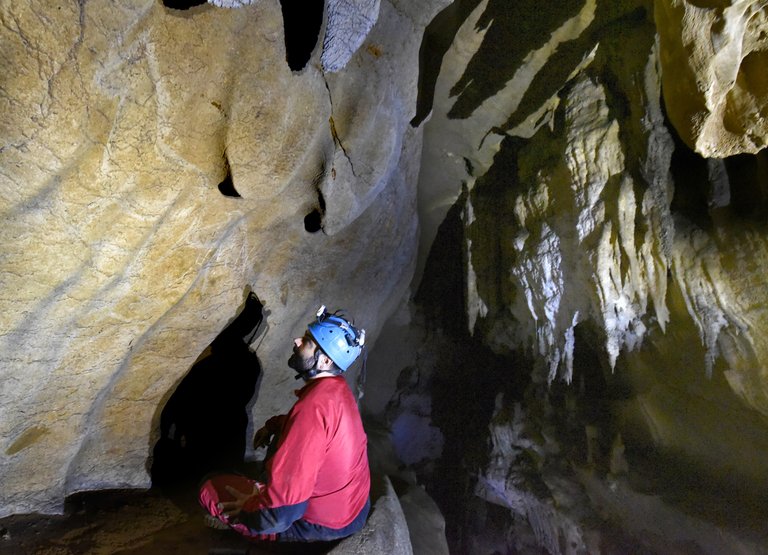
For me, the great peculiarity of Atxurra is that it is clear that they wanted to hide those drawings. It is not easy to reach the place where they are: you have to pass puddles, drag by the ground and then they are up, four meters from the ground, on a narrow cornice. We have also had to be very careful not to fall, and to continue with the studies we have to put scaffolding and take safety measures, otherwise we will have a great risk of pain. Therefore, there is no doubt that they wanted to ride in a hidden and reserved place, and that, of course, is not done without more, there must be some reason, because they were willing to endanger life.
Doesn't that happen in other caves?
Yes, for example, in Santimamiñe. It is now adapted so that visitors can be comfortable, but for those who made prints and the first explorers and researchers it was not easy to reach some places. In the cave of Etxeberri of Zuberoa, during the years 2007-2010 we were researching, and there it was also very difficult to reach a sector with drawings. But in Atxurra it is even more difficult. Here they made extreme paleospeleology [laughter that is so called paleospeleology].
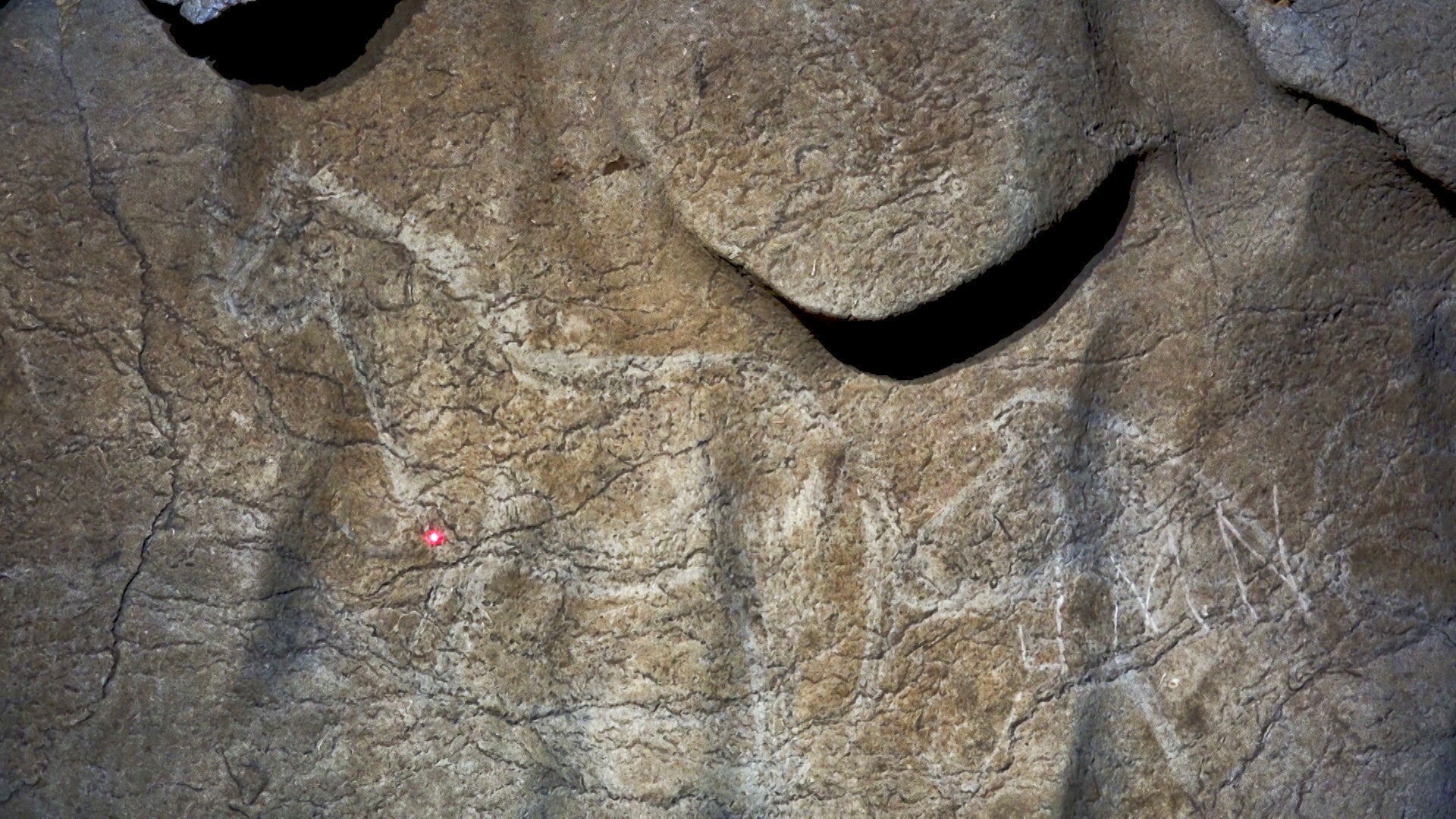
In addition, on the way there are beautiful walls to make engravings that are perfectly clean, intentionally looking for the highest and most difficult places. Even knowing that they are there, they do not look from below, they barely see the two horses of the photos. Everything else, and there are 14 sectors, is invisible.
And we haven't seen everything yet. We have counted about 70 animals, but there are many more because some are on top of others and until we separate we cannot know exactly how many they are. In addition, we have not yet looked at all the sites: one of the speleologists has gone up to the two cornices in which I have not been, and it seems that there are also engravings, and at 200-300 meters inside the cave, after a narrowing, there is another cavity in which they will almost certainly be engraved.
It can be said that it is the cave with more animal figures in Euskal Herria.
What are the images like?
They have characteristics typical of the Magdalenian figures. They are engraved and some are drawn in black: body shape, mane, tail, eyes... Existing species, the same as those existing in the Treasury, especially bison, horses and goats.
In that sense, I would look like Altxerri, but there are some particularities that have not appeared anywhere else. Especially, a bison full of pitchers. It is very striking because in the similar prints that have been seen so far have drawn the same trigger, as the end of an arrow. But this is very full, it has about 20 pitchers. The others have much less; the experts have interpreted it as a good game. The fact that this bison has so much shooter tells us something else, but we don't know what.

Of course, they did not draw to decorate the place of residence. If not, they did not hide them and would not do them on top of each other. And it is striking how they are in some places, one above the other and all together. They look like legs, horns, backs, heads... in scramble, and it is difficult to distinguish between rare animals and to know how accurately there is. For this we will need a lot of time.
You still have a lot to research.
Yes! We have a lot of work to do, but a nice job: make decals, analyze them... As we have already said, we will place a scaffold that will allow us to see and analyze better. What happens is that now we have not been able to take pictures because we could not get away enough. For example, there is a bison of two meters, but it does not come out in photos because we could not go further back, because the cornice is very narrow.
In addition to engravings, we have archaeological material. Under the Juxtu horses is the coal and a sheet of stone. They used it to paint coal and it will serve to test the C-14. And on the sheet we will look for use clues to know what they used it for. In this sense, the tools are very useful to understand how the engravings were made and contextualize them.
In fact, context is very important. All the drawings in Atxurra belong to the Madelein period (about 14,000 years ago), something very common in the Pyrenees, that is, in the cave there are paintings of a single period. They are in addition to this period. In Isturitz there are also some of the gravetic episodes, but in Euskal Herria and in the Pyrenees, they belong to the Madelein period. In Cantabria, however, it is normal that drawings of different times appear in the same cave. In Tito Bustillo, for example, there are drawings in five phases, and in Altamira they combine those made in different eras. Therefore, also in this sense, those of Euskal Herria and those of the Pyrenees are unique and we do not know why.
Buletina
Bidali zure helbide elektronikoa eta jaso asteroko buletina zure sarrera-ontzian