 Bilatzailea


Data centers: dark clouds on the ground
The rapid growth of artificial intelligence and data has driven huge infrastructures with huge demands for water and energy. The cloud is growing a lot and is creating an increasingly longer shadow over the environment and society.
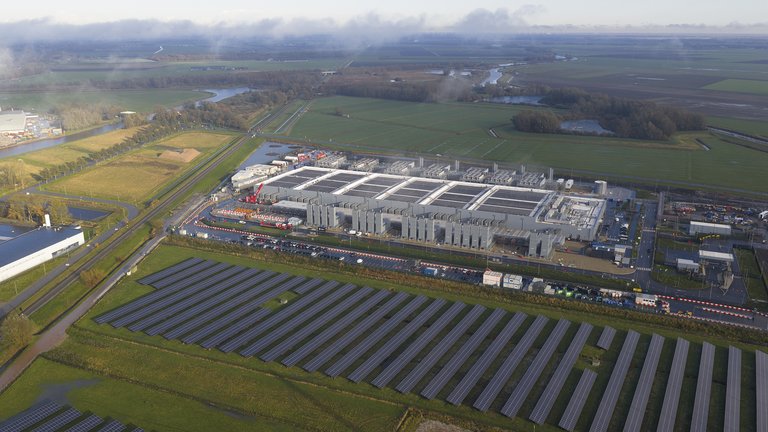
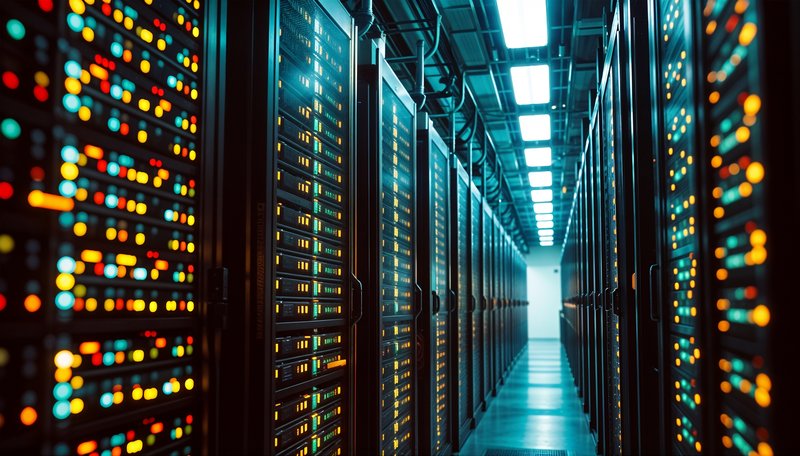
Every time we use our mobile phone to send us a whatsapp, look for something on the Internet, watch Youtube and, of course, ask the Chat GPT, we are using the data. Imagining a world without data is no longer possible. And although they tell us that the data is in the cloud, and we imagine them as such, they are on the ground, they are data centers composed of machines and cables.
There are more than 10,000 people in the world and they are multiplying at a dizzying speed. The explosion of creative artificial intelligence has a direct bearing on this. Because artificial intelligence needs a lot of computing power, and to respond to that, huge data centers are being built here and there. In many places, problems have arisen with the environment and its inhabitants, such as the depletion of aquifers. In fact, these giants require a lot of energy and water and, in addition, they pollute a lot, produce a lot of noise and heat the environment.
The United Nations Special Rapporteur on water and sanitation has analysed the issue and in the report highlights that the rapidly expanding data centres linked to artificial intelligence are causing “an alarming demand for water and a dramatic increase in electricity consumption”. “This trend poses serious risks to aquatic ecosystems and is not sustainable for the future,” the report says. It also concludes that this demand for water and energy seriously undermines the agreed climate change mitigation plans and threatens a number of fundamental rights, in particular the "right to access drinking water and sanitation and to have electricity to meet basic needs".
“The exponential growth in energy demand is putting great pressure on the construction of large hydroelectric dams, as well as on the start-up of thermal and nuclear power plants, although this accelerates climate change and increases the risks of water pollution,” he warns. “Indeed, corporations like Amazon, Google, Meta and Microsoft are forging strategic alliances with the hydrocarbon industry and making plans to build nuclear power plants to meet their enormous energy demand.”
“The first problem is that we can’t really know how much water and energy they waste.”
Thus, the rapporteur asks that the construction of data centers be stopped for a while: “States and international organizations should promote a moratorium and provide clear information on their water and energy consumption and risks to climate change, the sustainability of aquatic ecosystems, the human rights of impoverished populations and the survival of vulnerable productive sectors. The water and energy demands of these centers must be regulated by setting priorities based on transparency and adequate information, in accordance with the principles of sustainability and equity, and guaranteeing the fulfillment of human rights.”
Lack of transparency
“This Rapporteurship was requested by us,” says Aurora Gómez Delgado. Gómez is one of the founders of Tu Nube Seca Mi Río. “We didn’t think they would listen to us, but the rapporteur, Pedro Arrojo, decided to start this work and how, with what depth,” says Gómez. The members of the collective participated in the meetings organized by Arrojo for this Rapporteurship, together with people from other countries and from many areas. “We saw that we were all the same: very angry with the data centers for lack of transparency.”

Aurora Gómez Delgado, founder of the collective Tu Nube Seca Mi Río.
In fact, although it is clear that one of the main problems of data centers is the demand for water and energy, “the first problem is that we cannot really know how much it is,” Gómez denounces. “In Aragon, when we were making some allegations, we found that they were asking for wells without inspection,” he explains. “We don’t really know how much water they waste.” An article published by the Guardian reveals that hiding water consumption is part of Amazon’s strategy and, according to another article in the same newspaper, they emit seven times more CO2 than data centers admit.
A study published in the journal Patterns estimated that by 2025, artificial intelligence data centers had consumed as much water as bottled water worldwide. “Sometimes they remove water from rivers, but mostly from aquifers,” explains Gómez. This obviously affects ecosystems, but it also deprives the inhabitants of the environment of water. “In many places we have seen that they have run out of drinking water. In addition, water is often contaminated. And it must be taken into account that water is also dissipated and polluted throughout the chain behind the data centers, starting with mineral extraction.”
Just like our computers, data center machines produce a lot of heat and require constant cooling. These are the cooling systems in which they use water and in which they spend most of their energy. Data centers consume between 3% and 5% of the energy consumed worldwide. But they are not homogeneously distributed. In Ireland, for example, in 2023, the 82 active data centres consumed 21% of the country’s electricity, more than all households. The International Energy Agency estimates that this figure will reach 32% by 2026. In Aragon, the planned data centers would require up to five times the current consumption of the region.
In the shadow of the renewables
In many cases, especially in Europe, they ensure the use of renewable energy. “It’s not viable,” says Gómez. “They say that, but what they are doing in recent years is getting new concessions to exploit the gas (in Italy and Germany), keeping open the coal thermal power plants that were going to close (in Poland, for example), buying nuclear energy and, as we are seeing lately, invading countries to be able to feed artificial intelligence to steal oil.”
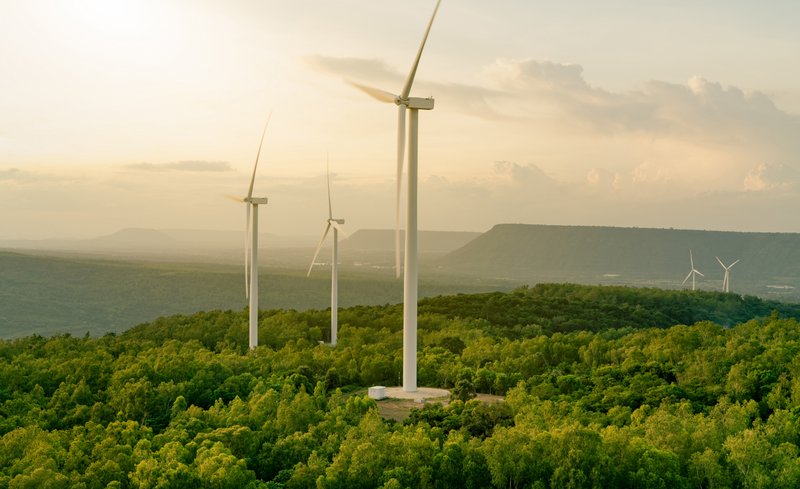
Large data centres will account for a large part of the energy generated by renewables, making the energy transition more difficult. ED. : Fahroni/Shutterstock.com.
On the other hand, the use of renewable energy does not solve the problem. Given the demand of large data centers, they will account for a large part of the energy generated with renewables. This is what happened in Ireland: between 2017 and 2023, all the additional wind energy generated was absorbed by the data centers. This means that fossil fuels will have to continue to be used for the rest of the activities, reducing the chances of decarbonisation. “They are completely thwarting the energy transition because they are taking away the energy that would be needed for that,” says Gómez.
Even in the case of water, new cooling systems that require very little water are increasingly being prescribed. “This is another type of greenwashing-called bluewashing,” explains Gómez. “They always say they’re going to spend less, but we know, we’ve seen, that’s a lie. They tell the citizens that, but once built, there is no transparency about how much water they consume. They're lying."
“They’re thwarting the energy transition because they’re taking away the energy that would be needed for that.”
Although they require a lot of water, many are built in very arid regions. In fact, they are the cheapest and most inhabited soils. “They are very impoverished places where the people who stay are usually more vulnerable and less likely to defend themselves, for example, against expropriation,” explains Gómez. “Besides, their land is worthless. The value of the Earth is an important point, since large data centers cover a huge area. And on the other hand, if you go to Pamplona or San Sebastián to try to open a data center, the authorities may refuse you because they have other options. But go to Talavera de la Reina, the fourth most depopulated city in Spain, whose city council will welcome with open arms a project of this type that comes in the name of progress.” In Talavera de la Reina (Toledo), the process of building a huge Met data center is underway.
In Álava and Navarra
Large data centers are also beginning to arrive in the Basque Country. In Navarra there is a project to build Campus Data Navarra in Gazólaz. But most of the projects are for Álava. The Bilbao-Arasur Data Center is already under construction in Ribabellosa. It is a strategic point because it is where the three submarine cables that arrive from the USA to Bilbao and Santander meet. In addition to Arasur, other projects for Álava have been announced. If half of them were made, Álava’s electricity consumption could triple.
“We’re talking about big data centers, and that’s a very important nuance, because that’s where the problem lies in particular.”
“We are talking about large data centers, and this nuance is very important, because it is in them where the problem is especially,” says Gorka Julio Hurtado, a computer scientist and technology expert. “We’re going to need data centers, but we have to take into account how they are, who they are in charge of, how they are deployed, and the problems they cause.”

Gorka Julio Hurtado. Technologist, developer and teacher. Expert in social and sovereign technology
Those that are going to be built in the Basque Country will be fed with renewable energies and will require very little water. Or at least that's what they say. “They don’t provide clear information, only press releases and press releases that look like greenwashing,” denounces Julio. “They insist on words like efficiency, optimization, but there is a huge lack of transparency. In addition, they don’t need to publish their consumption, so we can’t even know how much they will actually consume.”
“In addition to greenwashing, there is another superficial expectation that they always use and never meet: that they will create jobs,” adds Julio. “They advertise thousands of jobs that never arrive, because everything is fully digitized and focused on efficiency.”
“The closer the data centers are, the better. It doesn’t have to be macroscopic.”
“In addition, what is happening in many cases is that public investments are made (for the adaptation of the electricity network, etc.) to stop later in a few private hands, which is not allowed,” explains Julio. The data will also end up in the hands of four private companies. “We are in a data colonialism that directly affects citizens: we are expropriated from our data, exploited, and dated (we become a data set that will continue to be exploited in the future). We lose control of the data.”
Digital sovereignty
That’s why sovereignty is key, according to Julio. “The closer the data centers are, the better. They don't have to be macros. They can be multi-scale. We don’t always have to go to a server in the United States if we can do it here; and if we can do it in our own country or on our own computer, even better. Why don’t municipalities, for example, provide citizens with infrastructure to store our data, for example in industrial estates?”
ED. : KM Stock/Shutterstock.com.
Even when it comes to artificial intelligence, things could be done differently. “Here he is doing a great job of developing other models adapted for us. There are projects such as Latxa developed by Hitz Zentroa or Kimu developed by Orai. They are smaller models and do not have sufficient computing power. That’s a very interesting path.”
“And when it comes to larger scales, let’s think about how we want to do it among all, but taking into account the environmental and social impacts, with democratic control and, if there are benefits, returning them to the local population.”
“We don’t have technology at all.”
Julio misses that participation and that debate: “We need these infrastructures, and we will have them. We should start thinking about how we're going to do it, and I see big gaps there. We don't have our heads on technological sovereignty at all. And in many places we are putting on the red carpet for private companies to do their business.”
In fact, significant advantages are often provided for large data centers. For example, they are declared projects of special interest and do not have to pay taxes. In addition, they have priority and better prices for energy and water consumption. “They cause energy gentrification,” explains Gómez. "They don't pay taxes, we have to adapt the electricity grid, the discount that the electricity companies make to them is paid by the citizens and, in addition, the appliances begin to deteriorate. In San Mateo del Gállego, just next to the Amazon center in Villanueva del Gállego, the appliances began to deteriorate due to power cuts. The company replied that the interruptions were caused by the Arabazozos. The Arabazozos!”.
In the houses next to the Amazon data center in Villanueva del Gállego, household appliances began to deteriorate due to power outages. They blamed the Arabazos. ED. : Cami Johnson/Shutterstock.com.
Solutions
Looking to the future, the data centre industry is predicting solutions such as building data centres underwater, in the Arctic or in space, using waterless cooling systems, reusing the heat they generate to heat homes or nurseries, etc. Gómez, however, is clear: “In the same way that we have to deconstruct machismo or racism, we also have to deconstruct technoptimism. In this way, we will believe less in the propaganda messages of the industry and see more clearly what technologies we want.”
“We are clear that the problem is social and that the only way forward is through digital degrowth,” Gómez continues. “There is another way of using technology: using non-proprietary social networks, free software, etc. They are not only sovereign and ours, but they spend less, because by eliminating this layer of capital that is absorbing our data, the Internet consumes much less.” On the other hand, Gómez believes that artificial intelligence should be limited to very specific uses, such as research. "So we wouldn't need these huge data centres and maybe we wouldn't stop climate change, but at least we wouldn't increase it tenfold."
“Like racism or machismo, we need to deconstruct technoptimism.”
The idea of digital growth also seems interesting and necessary to Julio. But if you focus only on this, you see the risk of moving away from reality. “For me, the keys are to achieve the greatest possible sovereignty of the infrastructures and, if possible, democratic control; to carry out the necessary studies in terms of energy and water consumption and to take seriously the social and environmental impact; to act with transparency; and to work on the idea of multi-scale.”
Buletina
Bidali zure helbide elektronikoa eta jaso asteroko buletina zure sarrera-ontzian