 Bilatzailea

Publishing has become dangerous
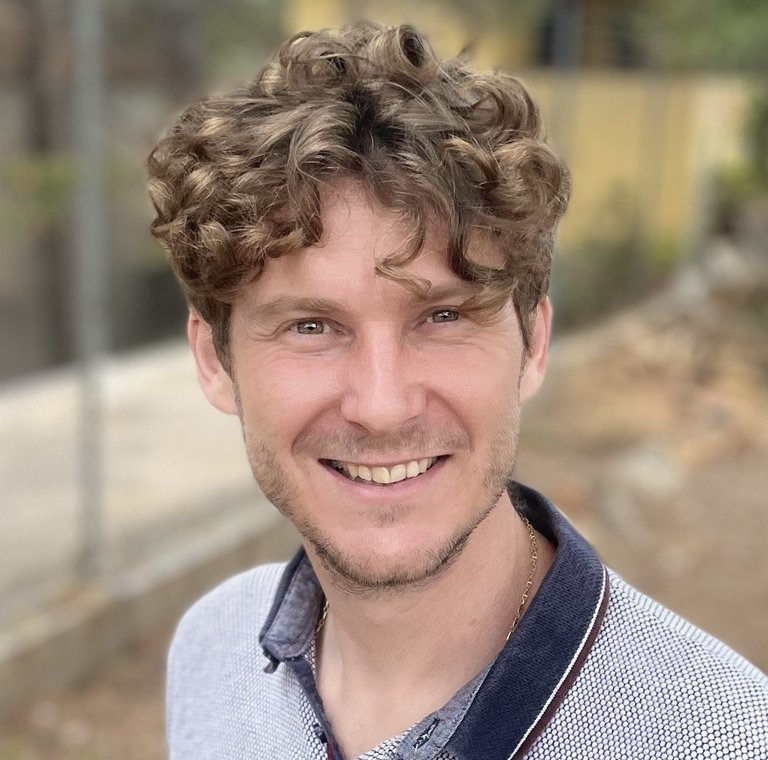
Pascual Diago, professor and researcher of Mathematics Didactics at the University of Valencia (UV), has become known for a joke. Diago confesses that this joke is based on deception and even on revenge. In fact, to denounce the anti-ethical behavior of some scientific publications, he has published a false and absurd article, in one of them. He has told Elhuyar the way to get there, sometimes laughing, and also seriously, because the corruption of publications is one of the most obvious problems of the scientific system.
Diago studied mathematics first, but before starting in didactics, he obtained his PhD in astrophysics and researched in this field. “I loved it, I enjoyed it a lot. However, at that time, in 2008-2009, the issue of places was very complicated. I had the opportunity to go to the Paris observatory to investigate, but I didn't feel like going outside at the time. What happened? Well, at that time, in the Valencian Community, they opened a private digital university, and I started as a teacher in a master’s degree there. Then they also needed it in the degree of mathematics and later in the degree of didactics. That’s how I got away from astrophysics and got into didactics,” he recalls.
He has made it clear that he also likes didactics. To begin with, his hobby comes from his youth, since he taught particular lessons. In addition, when he was assigned more didactic subjects in that digital university, he decided to study a master’s degree in specific didactics. Thanks to this, he entered the University of Valencia: “Just at the end of the master’s degree, around 2015-2016, some places in Mathematics Didactics were created at the University of Valencia. And since I like the area, and the working conditions are better in the public university, I introduced myself.”
“It is clear that publishing articles is essential to progress in the academic world.”
However, today he continues to read books and articles on astrophysics, and thanks to his research in this field he achieved a six-year period. On the other hand, he took out the second semester in the field of didactics, and he says that next year he will also ask for the third.
It is clear, however, that publishing articles is essential to progress in the academic world, and that is how this vengeful joke has come to pass: “I had a hard time getting ownership because of some unwritten criteria. It had to do with the date of an article, but it was unfair. I finally got the place, but I was left with the thorn.”
A serious joke
While he was there, he received an email from a predatory magazine, which allowed him to publish an article in exchange for money. “The magazine was about obstetrics!” he says, laughing.
“At least they had to look at who they sent the offer to, right? I thought it was so embarrassing, I decided I'd better joke. So I asked ChatGPT to write the abstract. The result was absolutely absurd, without legs or head: the timbres of pregnant women mixed with the didactics of mathematics. But I was accepted and asked for the full article. Then, again with the help of artificial intelligence, I prepared an absurd thing that looked like a scientific article, with false humorous references and invented names (Sneakydez, Trickón, Sneakarez, Hoodvez, Cheatillo...) to make it clear that it was a joke. And yet they accepted it!”
He insists that he did not intend to take any academic advantage of this publication, so he sent it under the pseudonym of Pascual Chiago and with an invented charge: Professor of the Department of Didactics of Mathematics and Obstetrics.
“Although it may have been reasonable in the beginning, it has become dangerous because it encourages anti-ethical behavior.”
He decided to expose his case in Retraction Watch. This organization reports on the rejected articles, some of which are rejected for errors and others (increasingly) for fraud.
Diago has shown how easy it is to publish fraudulent articles and, in passing, has shown that the system is corrupt: “That’s what the expression says Publish or perish. And that's what brought us here. It’s very unfair, and the need to publish, although it might be reasonable at first, has become dangerous because it encourages anti-ethical behavior.”
Among the injustices, Diago gives the example of scientists who have just been mothers: “This is changing now, but some researchers who have been mothers for a while have been unable to publish, leaving them behind in their academic career. And the same goes for those who are in charge of surveillance, or other tasks other than research. It seems like when they’re doing it, they’re not doing anything, but that’s real life and it’s important.”
Diago also left astrophysics for “real life.” However, he is very satisfied with the teaching of mathematics and intends to continue doing it while doing other things. That's real life.
Buletina
Bidali zure helbide elektronikoa eta jaso asteroko buletina zure sarrera-ontzian