 Bilatzailea


50 years of chemical research: revolution or evolution?
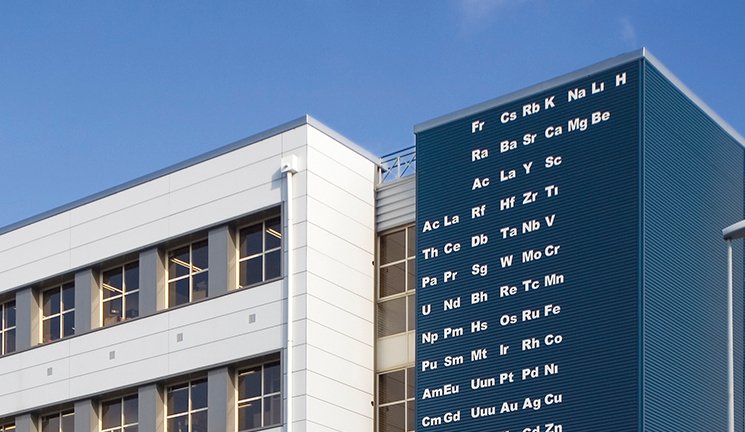
Fifty years ago, chemical research underwent a great revolution, more or less with the creation of the Faculty of Chemistry of the UPV. in the 1970s and 1980s, the foundations of modern chemical research were laid today. Organic chemists, for example, abandoned the total synthesis of vitamin B12 and other complex natural products and began to use transition metal catalysis or pericyclic reactions to prepare heterocyclic drugs. There were also spectacular developments in the field of inorganic chemistry in the fields of organometallic and bioinorganic compounds. Materials science, on the other hand, generated new polymers with multiple technological applications that changed our society forever. Finally, new analysis and characterization techniques such as HPLC, IG, MS or EMR became available to many researchers, thus completing the aforementioned chemical revolution.
All these advances would make it wrong to think that chemical research in the last 50 years has been nothing more than an evolution of the previous century. For example, let’s remember that at that time there was no Internet! To write an article, it was necessary to consult the bibliography in the huge paper publication “Chemical Abstracts” of the library, select the articles, read the originals in physical journals or request re-publications from the authors by mail, write the article, send it by mail to the publisher, receive a letter of resolution from judges or referees, etc. All this seems unthinkable to the young researchers of today, but it was so until 30 years ago.
In recent decades, the interdisciplinarity between chemistry, biosciences and materials sciences has been greatly strengthened. Chemists have become fundamental in the development of new drugs or materials, for which we have invented new methodologies such as biocatalysis, asymmetric catalysis, combinatorial synthesis, click synthesis, automated solid phase synthesis and flow synthesis. Some of these techniques have been used with great success in the Faculty of Chemistry.
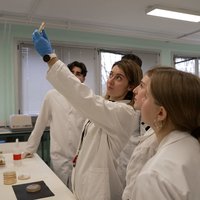
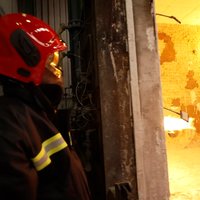
In recent decades, there has been a strong social demand to reduce the environmental impact of the products and materials produced by these chemicals. Procedures for safe conduct of chemical research have also been improved. It seems incredible that in the 1980s, in some laboratories of the Faculty of Chemistry, reactions were carried out without a hood, without gloves, glasses or other protective equipment, and even smoking cigarettes there was quite natural! Fortunately, all this is a thing of the past and today the safety standards are strictly observed.
In the near future, the use of powerful algorithms based on artificial intelligence is highly likely to create a new revolution in chemical research. Until now, the preparation or transformation of new molecules or materials has been a logical process based on the intuition and experience of chemists. Perhaps in the coming decades, the design, optimization and, why not, even the robotization of the synthesis itself, can be a computer-guided process. It seems that we are on the verge of spectacular changes!
Buletina
Bidali zure helbide elektronikoa eta jaso asteroko buletina zure sarrera-ontzian