 Bilatzailea


Rosetta/Blue Gene Probe: Supercomputer/Bird Ring/Awards
The European Space Agency's Rosetta spacecraft, continuing its journey to Churjumov Comet, has crossed 5,000 kilometres from Earth. In this way, it has been possible to take advantage of the force of gravity of the Earth to direct it towards the outside of the solar system. Rosetta was launched in 2004 and will conclude its mission in 2015 with the arrival of Churjumov comet. It enters the orbit of the comet and travels around the Sun collecting data. These data will be used to investigate the origin of comets, interstellar matter and the origin of the solar system. In total, it will travel more than 7 billion kilometers, but before it gets there, it will also collect data from Earth, the Moon, Mars, and two other asteroids. On the way there, it will pass by the Earth for a third time, in November 2009.
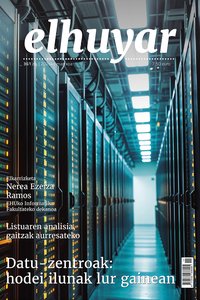
Every two years, the list of the 500 most powerful computer systems in the world is compiled. The results have been released this week and, once again, the Blue Gene supercomputer is the fastest, for the fourth year in a row. it has a speed of 478 teraflop; that is, it performs 478 billion calculations per second. IBM is from the house and their goal for the future is also not slow, they want to get a petaflop speed supercomputer, that is, a computer that will make 1,000 billion calculations every second.
Next Saturday, November 24, there will be a day dedicated to bird rings in Bayonne. The day is organized by the Museum of Natural History, where they will explain why and why the rings are placed on the birds. The day begins at 9 a.m. and will take place at the Barta House in Bayonne, the main residence of the Natural Area of the Ansot Plateau
An interdisciplinary team from the University of the Basque Country and the Hospital de la Cruces has received the award. The Ordesa Prize for Neonatology. In babies born prematurely, a lack of oxygen and blood often puts them at risk for neurological damage. They have been awarded for the experimental model they have developed to quantify and evaluate these damages. The model uses lambs, which are very suitable for the study of cerebral circulation and metabolism and have a similar measurement to that of newborn babies.
And from one prize, to another. The aeronautical company ITP, based in Zamudio, has won the EMAS Environmental Award in Spain. The EMAS Awards are environmental awards promoted by the European Commission, and the winners in each state are candidates for the European Award. This year’s awards have been given to those who have excelled in the reduction, reuse and recycling of waste, and ITP has won the award in the category of large companies. As far as the titanium chip is concerned, for example, they have collected and properly managed 1,000 tons separately, that is, more than half of their metal waste. On 19 November, the European winners will be announced.
Buletina
Bidali zure helbide elektronikoa eta jaso asteroko buletina zure sarrera-ontzian