 Bilatzailea


The microscopic needles
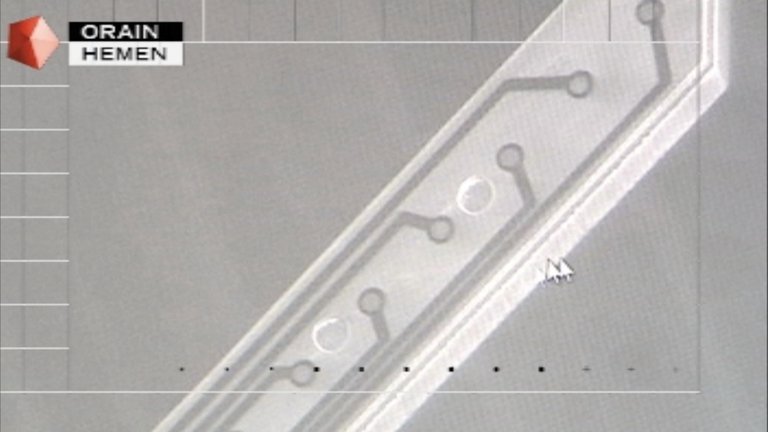
ANE ALTUNA; ik4-ikerlan: It's what we've done here at Ikerlan, called microscopic needles. These needles have application in neuroscience: what is done is to enter the brain, and on the one hand, the electrodes measure and are also able to stimulate neuronal activity, and on the other hand, we emit drugs with fluidic channels. The needles currently in use are made of silicon and have
a number of electrodes, and the fluidic channels run separately, it would be another device and the gursa has been an advance in integrating the two into a single needle. They are made of polymer and therefore pliable, and they adapt to the brain, and on the other hand there are electrodes on the surface, not sunk like in other needles.
They are very small needles, they have a width of a fifth of a millimeter to make an idea and the electrode is almost the size of neurons.
It has very small components, which is why what we do here is to insert the needle into it, and we would have, on the one hand, the electrical connection, the registration or the stimulus in the brain, which we achieve thanks to these pins. And on the other hand, we have fluidic, fluidic entrances. Here we would also put some tubes and syringes attached to these tubes. It has
application in neuroscience. The neuroscientist with whom we have worked has studied epilepsy, but it can also be useful for many other diseases, such as Parkinson's, Alzheimer's or depression, diseases that we all have in our mouths.
Buletina
Bidali zure helbide elektronikoa eta jaso asteroko buletina zure sarrera-ontzian