 Bilatzailea


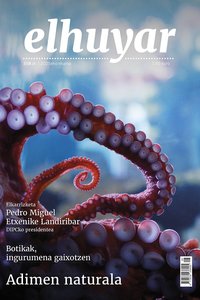
How do they sleep?
"Baby bear, sleep in terror, I'm here to take care of you..." The crib clearly indicates that sleeping can be dangerous. That’s why herbivorous animals sleep fewer hours than carnivores. In fact, because they can become prey during sleep, many animals sleep little or not until they reach a safe place.
Because it is widespread in all species, sleep is thought to play a very important role. In addition, the rules of sleep are adapted to the lifestyle of each species: lazy and armadillos sleep twenty hours a day, while the Dall mazopa is said to barely sleep; crocodiles and alligators can stay up for days and days without being able to say if they are awake or asleep; night predators sleep during the day, while bats appear in the sky at dusk. Although much research has been done, the cause of sleep is
unclear. However, there are some clear facts: it has a great evolutionary antiquity and is very adaptable. Only in this way can it be understood that not all dolphins, whales and, in general, all aquatic mammals die by drowning when they are asleep. In fact, they sleep with one side of the brain awake.
Buletina
Bidali zure helbide elektronikoa eta jaso asteroko buletina zure sarrera-ontzian