 Bilatzailea


Studying the health of the sea
november 13, 2002. The Prestige single-hull oil tanker sank on the Galician coast carrying 77,000 tons of oil. It dyed 1600 kilometers of Cantabrian and Atlantic black coasts and caused the greatest ecological catastrophe in our history.
At the time of measuring damage, scientists knew little about the health and pollution of the Cantabrian coast. So they could hardly tell the extent of the damage and how long it would last.
IONAN MARIGOMEZ; upv/ehu: We started then, 10 years ago, taking exams with full intensity, there was funding to work for three or four years, we got incredibly good and abundant data and I have to say that we were able to make a portrait, to say that the damage has come this far
When the public subsidies ended, the studies were suspended and the scientists have only carried out one-off studies.
IONAN MARIGOMEZ; upv/ehu: The Prestige, we don’t know how long it was surpassed and what worries me the most, what worries me the most is that if it were at this moment, and it will be safe, the other Prestige will come again, politicians and those who have to make decisions about the environment will ask us how we are and what we do and unfortunately the answer will be what it was ten years ago, we don’t know, we don’t have the data.
The port of Arriluzea in Getxo. A team of researchers from the University of the Basque Country takes samples to obtain data on the current health situation in the port.
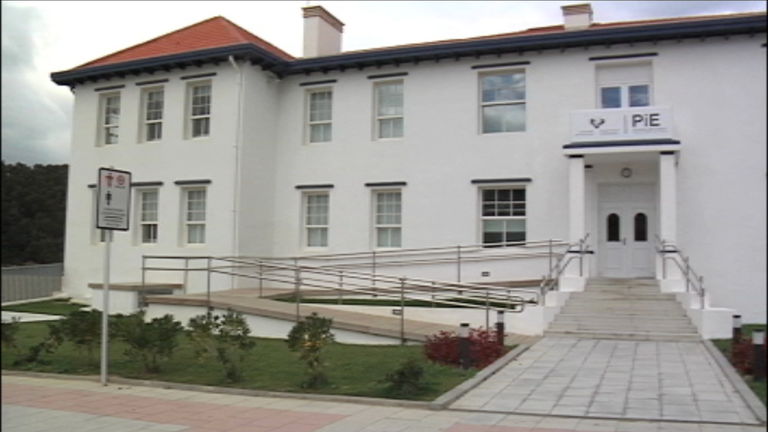
They will take the mussels and take them to the newly opened Naval Station in Plencia for analysis.
The results shall be classified, catalogued and stored under appropriate conditions in the environmental specimen bank. This bank is an archive that will keep you informed about the state of our coastal health.
IONAN MARIGOMEZ; upv/ehu: in 60 years, I won’t be here, but if something were to happen, someone would come and I want mussels, or corocones, or lingual fish, from Urdaibai, 2012, of this time, and they will apply the techniques of that time, in these materials and they will be able to do such retrospective research and say that the situation has been and has changed and will reach that point.
The pollution of the Prestige was punctual but there are many new polluting days and these also affect marine ecosystems and species.
IONAN MARIGOMEZ; upv/ehu: The main concern today is the medicines, the medicines we use. We don’t realize it but we use tons of them and they end up going from our toilets to the coast... and that has its effect. It is very difficult to identify these compounds because they are present in very low concentrations in the sea, sediment, water, but at these low concentrations they have potentially serious effects. We are learning how to identify these effects, how to quantify these new pollutants, and if we have new challenges like this to understand these things.
Located on the edge of the sea, in a building of 2500 square meters, the special infrastructures of the Plentzia Marine Station allow the investigation of the species in the best possible conditions. Classrooms, laboratories, aquariums... everything to know the state of the health of the sea.
IONAN MARIGOMEZ; upv/ehu: Here we have 300,000 liters of water every day. Huge aquariums, very suitable equipment, very controlled, with which we have the possibility to work with larger species, with small species or small specimens that we were previously limited to, and on the other hand, we also have the possibility to carry out experiments of longer duration
Outside the building there is a natural condition aquarium, the meso cosmos. You can do two or three years of experiments there. The laboratories are located near the aquarium. The samples undergo as few changes as possible until the start of the studies.
IONAN MARIGOMEZ; upv/ehu: Also here we have an opportunity to have experiments in experimental pathology that we have not been able to have until now. Pathology experiments require very careful and precise conditions in the laboratory, these were not, there, and we have biological safety aquariums. When you have it, another great universe opens up for marine health, that is, you have the tokchicality, the contaminants, but also the pathogens and the possibility of studying it and their combinations. And so having well-equipped laboratories next door to do molecular biology, cultures, histology, preparative chemistry and so on has been necessary and appropriate.
In addition to studying the health of the oceans, the Plentzia Marine Station also investigates what the ocean can bring to human health.
They teach master’s and postdoctoral courses and conduct experiments for projects in laboratories.
They will also organize guided tours and visitors can ask questions through intercom to the researchers who are working.
The aim of the centre is to motivate and attract the scientists of the future.
Buletina
Bidali zure helbide elektronikoa eta jaso asteroko buletina zure sarrera-ontzian