 Bilatzailea


Vehicles without a driver
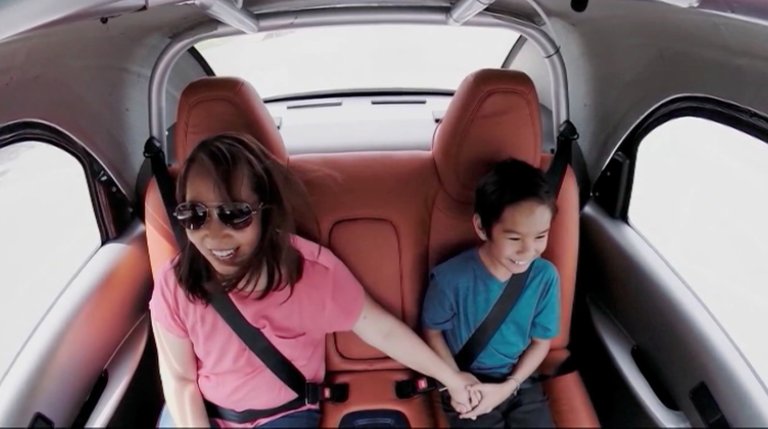
This egg-shaped vehicle does not have a steering wheel, accelerator or brake pedal. He doesn't need them. It is the prototype of the driverless car that Google presented at the end of May. in 2009, the company started working on this project. So far, it has been normal cars that have managed to walk without a driver so that the human being can take over any problem, but apparently the Googles have considered the technology mature and have eliminated all means of driving the car. Now the machine has full control.
IÑAKI LETURIA; Elhuyar: Would you go in or put yourself in their place?
EGOITZ ARRUTI; Mondragon Unibertsitatea:Yes these machines are quite reliable, they still have many things to develop but they are reliable. Would I go in? Oh, yeah, yeah.
Egoitz Arruti is a professor and researcher at Mondragon Unibertsitatea and his research area is telecommunications. It works in the department of signal theory and communication and what lies behind this complicated name is the technology of device control. The path of driverless devices begins here.
EGOITZ ARRUTI; Mondragon Unibertsitatea:We show here, in the telecommunications degree, the basic technology necessary to access this vehicle. Above that, the imagination of the designer or the person sets the limit. We make remote-controlled products from the second level, but there is always a person handling this system or device. We have not yet been able to operate this vehicle autonomously.
This device has its own name: Located in Aldridge Rover 5. It has been designed by a student of the Master in Embedded Systems. You can drive remotely using the university’s Wi-Fi network.
Distance in remotely guided devices is a basic factor. Bluetooth for close control is valid. Wifi, can be used at medium distances up to the point of arrival of the network. And over long distances, mobile phone coverage or even satellites can also be used, unfortunately making it popular military drones work that way. But these devices also do more peaceful things. These images are taken from a radio wave controlled drone. The company, founded by a former student of Mondragon Unibertsitatea, offers this type of services. Drones are fashionable.
EGOITZ ARRUTI; Mondragon Unibertsitatea:Drones can be of two types, one, drones that are guided from a distance, there is always a base, a person with authority, driving from a distance, and there is a second type, self-guided or following a plan. Someone told you this is your plan to fly and what you have to do is go to this point, do the action there and come back.
In fact, the plan or program you enter turns a remote control device into a self-managed one. You will make decisions based on this information. Just like this robot. It is the simplest example of decision-making. The car has proximity sensors that have become common to assist in parking and when it detects the object that bothers it, it stops and decides to take it to the left or to the right.
IÑAKI LETURIA; Elhuyar: We are surrounded by systems that think, more and more, for example, cars that brake or brake alone, robots that clean our homes,... think, among cachots.
EGOITZ ARRUTI; Mondragon University:Yes they have the intelligence, the ability to think, and this ability is limited to the function they have, for example, if the goal is to clean the house, their decision system is designed to clean your house.
All sensors and systems of driverless vehicles are designed to transport the passenger safely. But the two devices are not far from each other. This vacuum cleaner and the Google car can be said to be small cousins. They both use a laser eye to see the area, to scan the area. One will use this information to clean the living room, the other to avoid accidents.
The prototype, of course, is more complex than the vacuum cleaner. It reads traffic signals through the recognition software, pedestrians, other cars ... Its sensors on the wheels position it, using maps and GPS loaded in its memory. It has four radars throughout the turn to measure distances and a camera at the end to identify the lights, be they traffic lights or the brake lights of the car in front of it.
But Google isn’t the only one who’s taken the driverless car route. Large car manufacturers are already researching this field in their own way. This competition proves that it's not just a dream.
EGOITZ ARRUTI; Mondragon Unibertsitatea:A lot of car dealers are predicting, they have prototypes made, but they still have to get to the market.
IÑAKI LETURIA; Elhuyar: How long until the two of us are in a driverless car?
Mondragon University: I don’t have an answer for that. We'll see the systems take you and me and take us home, yeah, they'll show up.
There are still many gaps that need to be filled, not just technological ones. For example, if traffic regulations need to be revised, but everything seems to indicate that the future of the human being is to become co-pilot.
Buletina
Bidali zure helbide elektronikoa eta jaso asteroko buletina zure sarrera-ontzian