 Bilatzailea


Chip for autoimmune diseases
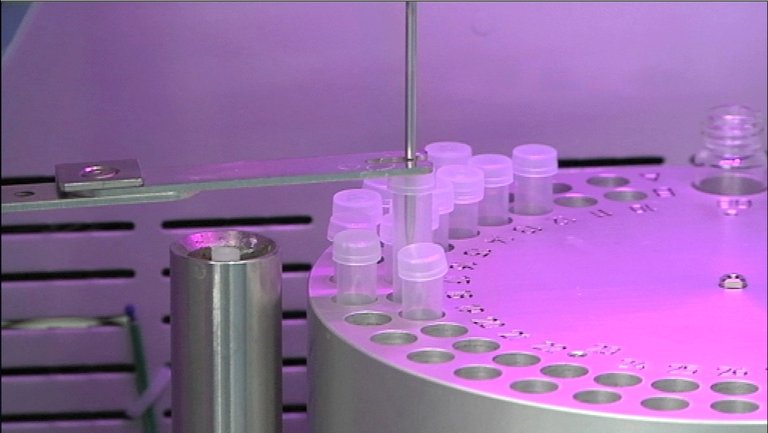
People with chronic illnesses in the “non-hospitalized surgery unit” of the San Sebastián Hospital receive treatment.
Beatriz Aierbe of Ataún has her first day in this unit.He was diagnosed with rheumatoid arthritis four years ago. Subsequently, he has also been diagnosed with Ankylopoietic Spondylitis Disease. These conditions cause swelling or inflammation of the joints of the hands and legs and damage to the back bone. Now he's been given a new treatment.
Assisted by Beatriz Aierbe: Until my whole body stopped. He didn’t give it to me in one hand, he gave it to me in two hands. I couldn't move my arms, my knees, my faucets, not even my jaw.It was then that they realized that this disease required treatment and they gave me metrotresate. I’ve been with him for two years without anything but then it seems that I also have Spondylitis and then I need something more. We'll see how it goes today.
These two conditions in the field of rheumatology belong to the group of autoimmune inflammatory diseases. This group includes a long list of diseases that affect different organs. But they are all diseases of the immune or defense system.
Olga Máiz, rheumatologist: The function of the immune system is to work against external agents such as bacteria and viruses, i.e. infections. In these diseases the immune system is agitated and goes against our body because it considers parts of our body as unknown.
Ana Iglesias, a Renterologist, suffers from Sjogren's Syndrome. This syndrome affects the glands that produce both saliva and tears.
About Ana Iglesias: I've always had my eyes always bad, which is what I decide to be conjunctivitis.With 18-19 years of eyes that beat me every time, make me last. I stove in many places and I don’t know what era, I daban cortisone and it doesn’t bother me.
Olga Máiz, rheumatologist: The difficulty of diagnosis is that the symptoms of these diseases are mainly confused with degenerative or mechanical diseases, so sometimes it is not clear at the beginning of the disease what the problem is.
Others are looking for a way to make an early diagnosis and establish the most appropriate therapy - among others, at the CIC microGUNE research centre. They use micro and nano technologies in their research. Their objective is to deepen the knowledge through the study of smallness, in order to subsequently focus this knowledge on specific applications.
In this work, they are taking advantage of a technology called surface plasmon resonance.
In this white room of CICmicroGUNE they work with this technology.
This is the device they use in this first phase. It's a glass prism with a sheet of gold on it. Through this device, when they affect the surface with light, a special phenomenon occurs: plasmoy.
By Santos Merino, CICmicroGUNE: Plasmons are formed between the surface of some metals and the environment in which they are placed. Between air or water and gold.Some electrons on this gold surface are free, and when we act on them with light, they produce waves on the surface. I mean, the plasmons.
These electron waves or plasmons form the basis of this technology, the first element to be able to diagnose the disease.
But, not the only one. In order to be able to diagnose the condition and to know if it is properly treated with therapy, it is necessary to identify some molecules present in the patient's blood or saliva sample: [Biomarkers of the disease].
By Santos Merino, CICmicroGUNE: It is not common to diagnose disease with a single protein. One set is identified, the number is variable: it can be up to four, 12, 15 molecules. They will give us information about the disease. If the disease has fully developed as it is in the early stages.
The third element necessary to identify the disease:they're antibodies.
Each of the disease indicator Biomarkers contains its own specific antibody. The work of these antibodies is to capture the corresponding biomolecules.
For this reason, these antibodies are placed on the chip to look for markers present in the blood or saliva sample.
The patient sample and the chip with the attached antibodies will be inserted into the machine.
Josu Martínez- Perdiguero, CIC microGUNE: Once this is biofunctionalized we include it within the system. The system is quite simple: we have a light source on one side and a detector on the other. When we insert the chip, the light is reflected here, on this surface, and the detector measures the reflected light.
By Santos Merino, CICmicroGUNE: If there are biomolecules in the blood sample that are representative of the disease, the antibodies will capture them. since they will be located at this small distance of 100, 200, 300 nanometers, they will be noticed by the plasmons and will change the signal of the light that is reflected. This is how we will measure this change of light
If the biomarker adheres to the antibody, there will be a change in the light that will be reflected by the plasm. This means that the molecular marker of the disease is present in this blood sample. The patient is sick. That's how they make the diagnosis. They also follow the same criteria to monitor the course of the disease or to establish the most appropriate therapy for each patient.
But, with the chip they use in this white room machine, a single biomarker can be detected. And in order to identify a condition, it is usually necessary to find a group of biomarkers.
That’s why CICmicroGUNEN is developing a new system based on surface plasmon resonance.
This is the chip they created. It is a sheet of glass that is coated with a polymer and has a pattern of nano-holes printed thereon. It is then covered with a thin layer of gold.
The chip comprises a plurality of nano-hole sites or arrays, each array being located at a separate location on the chip.And the peculiarity is that each site in them can identify a different biomarker.
By Santos Merino, CICmicroGUNE: Therefore, the advantage of this chip is that, even with its small size, it can detect a dozen proteins at the same time. With antibodies to a different biomolecular marker at each of these sites or networks.
The prototype of the new diagnostic system has been assembled in the optics laboratory of CICmicroGUNE.
Here's the chip. In this case, there is no need for the prism to convert the light into plasmons, the nanocules contribute to this (making this coupling). In addition, the optical assembly described above is preferably white but simpler, more straightforward. The transmission of light through optics and lenses is collected in an optical spectrometer, which will allow the reading of the result.
If in this case the biomarker and the antibody are bound, the frequency of the light that will be reflected by the plasmosis will shift, shift. That way they'll know that this patient is sick. Also the development of the disease.
Josu Martínez- Perdiguero, CIC microGUNE: Perhaps in the future we will have these systems, for example in a pharmacy or on the table in a consultation.They will be relatively small and in a direct and fast way, the doctor will be able to diagnose various diseases.
This chip has even more advantages. The system itself is compact and agile, and the processes used for the production of nanostructures are amenable to being carried out at an industrial level.
Buletina
Bidali zure helbide elektronikoa eta jaso asteroko buletina zure sarrera-ontzian