 Bilatzailea


Climate change in the Basque Country
Today we are going to talk about an issue that is increasingly important in the agendas of the administration, the media, scientists and, why not? citizens. Specifically about climate change. Rising sea levels, droughts, floods, etc. We are repeatedly warned that for decades the effects of climate change can be very serious. To mitigate these effects and find ways to adapt to changes, hundreds of scientists around the world are working intensively. Climate change
in the Basque Country is also under investigation. the BC3 research centre opened in 2008. The Centre ' s main objective is to conduct long-term research into the causes and effects of climate change. Ihobe, the University of the Basque Country and Ikerbasque are the partners of the research centre, which has four lines of research: adapting to climate change and knowing its impacts; designing measures to reduce change; finding ways to reach international and regional political agreements; and developing and supporting research that supports climate policies in the Basque Country. Although located in the Basque Country, BC3 participates in a wide international network. At the
moment, seven researchers from different disciplines work in the research center. Great Britain, Brazil, Korea, Italy, Spain... the BC3 research team is made up of international scientists. There is also a Basque. Agustín del Prado investigates the effects of climate change on rural lands.
The scientific director of the research center is Professor Anil Markandya.
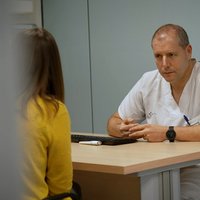
Teknopolis had the opportunity to speak with him at the BC3 headquarters in Bilbao. The British Anil Markandya holds a PhD in environmental economics. He has worked in research centres in Great Britain, Russia, Italy, the United States and France, and is also a member of the Intergovernmental Panel on Climate Change, which received the Nobel Prize in 2007. His main line of research is environmental economics and resources.
MAIDER EGÜÉS; TEKNOPOLIS: Hello Professor Markandya, how are you? ANIL
MARKANDYA; BC3: Very well, thank you, and you?Very
well, thank you. What about you?
M. In the case of E.: Harvard, Princeton, Berkeley..., you have worked with the most prestigious universities and have also been a member of the United Nations Intergovernmental Panel on Climate Change. At the moment we have you in the Basque Country. A person with your resume will probably have the opportunity to research anywhere in the world. Why BC3 at the research center?A.
According to M.: Thank you, well, it was a very exciting new challenge which was set up by the Basque Government. They have established a number of centres of excellence, which are well funded, and which provide the to bringing researches, to establish your opportunity, and to develop something which is from scratch. This is something I have not done before, and so for me is a very exciting challenge to do it. I must also say, I have been working a little bit with the Basque(s), in the Basque Country, for the past three years before the centre started, and I have had a very positive experience. The Government is very positive, very interested in climate policy and in environment policy, and so they gave me this opportunity and I felt "let me try".
Thank you very much. Well, the Basque Government proposed an exciting challenge. They established a number of well-founded quality centers that allowed you to bring research, as well as establish your own program and develop something that starts from scratch. This is something I've never done before, and for me it was a very satisfying challenge. I had already been working with the Basques for some time, in the Basque Country, during the three years before the opening of the center, and I had a very good experience. The government has a very positive attitude and is very interested in climate and environmental policies. And since I was given this opportunity, I said to myself: “Let’s try it.”
M. In the case of E.: Climate change is a global problem. The BC3 research centre is small. What contribution can such a centre make to such a serious problem?A.
According to M.: Right, well, of course we are small, you are quite right, but it's a problem we cannot solve ourselves, but it's also a very big problem and it needs many different institutes to solve it, so we are one of these centres, we may not be the biggest, but we still can be the best, or one of the best, I should say. And that is our ambition, and it's an ambition to work with other centres, we cannot work alone. So we have a... a lot of my time is spent trying to develop a network. We have got centres outside, in India, in China, in Norway, in many countries, including in Spain, in the Catalonia, we are working with them also on this issue. Yeah,
well, of course we're small, you're right. But this is a problem that we cannot solve on our part, it is a serious problem and we will need many centers to solve it. We are one of the centers, it may not be the largest, but we can still be the best, or one of the best, I should say. And that is our desire, we want to work with other centers, we can not work alone. That’s why I spend most of my time creating a network. We also have centers abroad, in India, China, Norway... in many countries, also in Spain, in Catalonia, we also work with them on this problem.
M. In the case of E.: You are in contact all the time?
Are you always in contact?
According to M.: Yes, not only in contact, but we are developing sometimes, even joined programmes of work with them.
Yeah, and not just in touch, but working together. We have some common work programmes with them.
M. In the case of E.: Climate change will have an impact on people’s health, water resources, agriculture, ecosystems and infrastructure. Until recently, it was said that this phenomenon had to be combated. Currently, however, you are investigating ways to reduce its effects. This is also one of BC3’s main lines of research. Does this mean that we are in an irreversible situation? Should we accept the reality and try to reduce the consequences?
Well, I think surely we are now going to face some climate change, whatever we do. We have no way to prevent some happening in the future, the next fifty years and beyond that. But what we can do is to try to limit the amount that we have, we can limit it by reducing our emissions of greenhouse gases, but also we can adapt to it, we can change the way we live our lives, the way we conduct our agriculture... many activities so they are more adapted to the new climate that exist. So we are trying to do research on both this issues. But to understand how to adapt to the new climate, but also to understand how to limit the amount that we have. Well, actually, I think
we're going to have to deal with some climate change no matter what we do. It is impossible to avoid some future changes in the next fifty years and beyond. But we can limit the magnitude of these changes. We can limit it by reducing greenhouse gas emissions, but we can also adapt to what is to come. We can change the way we live our lives, or the way we carry agriculture... we can shape many activities so that they are adapted to the climate that it will be. So we’re trying to investigate two issues: how to adapt to the new climate, and how to limit the changes that need to happen.
M. In the case of E.: What measures can be taken to reduce the effects?A.
According to M.: Well, "To mitigate" it's a relation in relation to the climate change, reduce the emissions of greenhouse gases, and for that we have a number of options: of course we have to try reduce greenhouse gases from many sources: we have to reduce from transport, which is the major source, when we drive a car we are greenhouse gases. But we also emit gases from our... when we... when we... from the animals, because one of the gases is methane, and we also emit gases when we cut forests, and if we can and to reduce which we cut forests, we can keep more carbon, forests can sequester carbon. So we have many different options. There is no such thing I would see "it's the deepest", but we have to do activities on many of them to achieve this mitigation. Well, when we use the word
“reduce” in relation to climate change, we are talking about reducing greenhouse gas emissions. And for that, we have several options. Of course, we will have to reduce greenhouse gas emissions from many sources: we will have to reduce them from transport, which is the largest source; when driving a car, we are emitting greenhouse gases. But greenhouse gases are also emitted through animals, because methane is a greenhouse gas. And when we cut down forests, we also emit greenhouse gases. If we succeed in reducing the rate of forest clearing, we will have the opportunity to conserve carbon. Forests can store carbon. So we have a lot of options. There is no one more important than the other; there are many opportunities where we have to carry out many activities to achieve this reduction.
M. In the case of E.: They warn us that reducing greenhouse gas emissions is essential. This will require a global agreement. In our world, however, conflict reigns. Do you really believe that gas emissions can be reduced? Is it possible to reach a broad consensus on this?
According to M.: Well I realize it is very difficult come to such an agreement, but we have made some progress, because in 1997 we had the very famous Kioto Protocol, Kioto Agreement, which a lot or countries signed, and not immediately, but in the next few years, they accepted that they would make some reductions. Not big ones, but some. And of course, we, and the European Union, were one of these groups that signed, and then gradually big countries like Russia also signed. So, unfortunately in this agreement we did not get the United States, and Australia, and some others, but we are getting more agreements, little by little, and we hope this year in December in Copenhagen, when we start the negotiations for the next agreement, that we will have even more support, it's a very difficult process.
Well, I realize that it's very difficult to reach these agreements, but we've made some progress. In fact, in 1997 we had the Kyoto Protocol, which was signed by many countries. And, not immediately, but in the years to come, they assumed that they would make some changes. Not very big, but some. And of course, we, and the European Union, were some of the groups that signed it, and then, little by little, other large populations, like Russia, also signed it. Unfortunately, we were unable to include the United States, Australia and others in this agreement. But we are reaching more agreements, little by little, and we hope that this year, in Copenhagen, when we start the negotiations next year, we will still have more support, but it is a very difficult process.
M. In the case of E.: You mentioned that if emissions decrease by 70-80% in 30-50 years, the risks will be acceptable. What are acceptable risks?
I'm talking about A. According to M.: Well, that’s also a very difficult question... At the moment... we say acceptable if we can keep the increase in global mean down to about two degrees Celsius. Two degrees less, we could say, is acceptable in the sense that the risks associated with it are perhaps manageable. But even with that level of increase we could still have some small-small probability of very large damages, but those probabilities then become very small. But if we allow the gases to continue to increase and not have this big reduction, then we face the possibility of very large risks, risks of increases of maybe six or eight degrees even Celsius, which will make much of the planet uninhabitable. So that would be very bad, that’s what we try to avoid with this policy of very sharp decline.
Well, that's also a difficult issue. At this moment... it would be “acceptable” if the global temperature rise did not exceed 2°C. We can say that two degrees below is acceptable because the risks associated with this increase are acceptable. However, with this level of increase we would also have a small but very small probability of significant damage. But if we allow the amount of greenhouse gases to increase, and if we do not achieve a significant reduction, we have a great chance of being exposed to very serious risks. The risk of an increase of six or eight degrees, which would mean that most of the territories of the planet are not habitable. It would be very damaging. This is what we want to avoid with this policy of drastic reduction.
M. In the case of E.: Not more than two degrees
No more than two degrees
A. According to M.: Two degrees is what we say... is our kind of rule of thumb that we are using.
We say two degrees... it's kind of like the main rule we usually use.
M. In the case of E.: What arguments are needed for the Administration to start taking effective action? A.
According to M.: Absolutely it’s a political decision, they are the ones who have to push for these policies. And so the reasons we can give them, we can tell them that the evidence is getting stronger. Even last week we met in Copenhagen to discuss the latest evidence in climate change and it’s... looking that we had underestimated the rate of the see level is rising. We are seeing the melting of the ice caps in the Antarctic and the Artic, this is causing an increase already. And so politicians are seeing that these things are having a big effect, a bigger effect than they were thinking a few years ago. Now, of course, politics is not long term, most politicians are thinking of then next elections, which is maybe three or four years. Even but politicians have a sense of the importance of long term things, and this is where they have to be convincing. And they are beginning, I think, to understand that they are putting the planet at risk if they don’t act.
It is a political decision, absolutely. They are the ones who have to push these policies. And the reason we can give them... what we can tell them is that the evidence is getting stronger and stronger. We met last week in Copenhagen to discuss the latest evidence of climate change, and it seems that we underestimated the rate of sea level rise. We are seeing the melting of the ice sheets of the Antarctic and the Arctic, which is already creating an increase. So politicians are seeing that this kind of thing has a big effect, a bigger effect than they thought a few years ago. But, of course, politics is not for the long term. Most politicians are thinking about the upcoming elections, which will take place in three or four years. But politicians also know how important long-term policies are, and they need to be persuaded about it. I think they're beginning to understand that if they don't do anything, they're going to put the planet in danger.
M. In the case of E.: You are in favour of quantifying the costs of the effects of climate change. Will measures be taken only if they benefit the pockets of decision makers? A.
According to M.: Well, we have to try to make it as attractive as possible to people to take action. Of course, we don’t want to hurt the economy, already we are in an economic crisis, and so we don’t want to do things worse and more difficult, so if we can achieve what call reductions in greenhouse gases without having bad economic crisis, we must try to do that. We call these kinds of policies “no regrets” because they are policies which are to the climate, but also maybe to the economy. There are some policies like that, but some are not in that category and some will have some cost. And we want to do it in a way that keeps that cost as low as possible, that is very important.
Well, for people to get involved, we have to make it as attractive as possible. We do not want to harm the economy, of course, we are already in an economic crisis and we do not want to make it even more difficult. But it is possible to achieve reductions in greenhouse gases without causing negative economic effects, we must try. We call such policies “unrepentant” policies, because they are beneficial for the climate, but also for the economy. There are such policies, but others are not at this level and have costs. And we want it to be as low-cost as possible, which is very important.
M. In the case of E.: The exact impact of climate change on the world is unknown. And yet, BC3 wants to investigate the consequences of this phenomenon in the Basque Country. Is it possible to know what will happen on such a local level?A.
According to M.: Well, you know we say sometimes that you can think globally, but you have to act locally. So that is where the actions have to take place at a local level, and so in this case, in the Basque Country, we have to design policies here, and it is better that these policies are designed with the context of the people in mind, with their wishes, their interests, and this can be done better at the level of the local economy, the region. So we hope that is the direction in which policy will be made. Now some policies have to be made at a higher level, policies such as... a trading system for carbon emissions, that will not be taken here, that will be taken in the European Union and will be supported through the government, the Spanish Government for the Basque Country. But there are also things that the Basque Country can do and there is a very active climate change programme, which the last government prepared. And this programme needs some support, some research, and we hope that we can do some research which will have to develop that programme further. Well, sometimes
it is said: you can think globally, but you have to act locally. The activities must be carried out locally and, in this case, in the Basque Country, this is where we must design the policies. It is better to take into account the context of the people when designing these policies, their desires, interests... and it is better to do it at the level of the local economy, at the regional level. We hope that this is the path that politics takes. Many other policies need to be implemented at a higher level. Policies for the formation of a negotiating system for carbon emissions, e.g. This will not be dealt with here, but will be dealt with in the European Union and supported by the Spanish Government for the Basque Country. But there are things that can be done in the Basque Country and the last government prepared a very active program on climate change. This programme needs support, research, and we hope that we can do some research to further develop this programme.
M. In the case of E.: What would you say to those who say that the climate has changed many times in the history of the Earth and that this is not a new phenomenon, that is, those who question man-made climate change and the worrying forecasts so far?
I'm talking about A. According to M.: Well, I would say two things. One is “yes, you are absolutely right”, we have had previous climate changes, big changes, in the history of the planet. But some of them have been quite disastrous changes. There were not many people around to suffer them, but the species that disappeared some, that’s a result of some of those changes. Now, if you want to take the risk that Homo sapiens also goes out of the window, then maybe you can take that risk, but maybe we don’t want to take that risk. And second, is the climate, is this an anthropogenic phenomenon that we are? I would say that the evidence is now getting stronger, and stronger, that it is. You will always have people who are sceptical. After Galileo said that the world is round, it is not flat, and it goes round the sun, the sun does not go round the Earth... many people still didn’t believe for a long time, it took a few centuries before people all convincing.
Well, I'd say two things. The first, “yes, you are very correct”, has been preceded by climate changes, major changes, in the history of the planet. But some of them have been very unfortunate changes. There were not many people around to suffer them, but some of the species that existed at that time disappeared as a result of such changes. Now, if we want to take the risk of also throwing the Homo sapiens out of the window, we can put ourselves in danger, but we may not want to take that risk. And second: is this climate, the one we are experiencing, an anthropogenic phenomenon? I’d say yes, it’s more and more obvious. There will always be skeptical people. When Galileo said that the world is round and not flat, and revolves around the Sun, not the Sun around the Earth, many people did not believe him for a long time. Many years passed, centuries passed, until people were persuaded.
M. In the case of E.: But we don’t have centuries
But we don't have
centuries... According to M.: We don’t have centuries, no. We
don't have centuries, no.
M. In the case of E.: Thank you very much, professor Markandya, good luck in the Basque Country, enjoy your job here. Thank you, Professor
Markandya, good luck in the Basque Country and make your work here useful. I'm talking about
A. According to M.: Thank you, I look forward to it, and I hope we have some success in our centre, both nationally, globally, but also at a local level.
Thank you, I hope so. And I hope that you will succeed in the center, both globally and locally.
Buletina
Bidali zure helbide elektronikoa eta jaso asteroko buletina zure sarrera-ontzian