 Bilatzailea


Space shuttles, history
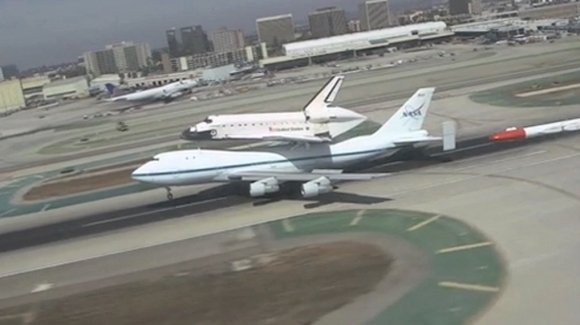
A strange and unreal image last week attracted the eyes of thousands of inhabitants in the city of Los Angeles: The space shuttle Endeavour could be seen crossing the streets of California’s gigantic capital. They took him to the California Science Center. When they build the space center that will house the shuttle there, Endeavour is said to be the museum’s most wanted device, the museum’s jewel.
A few months earlier, in April, the Discovery ferry made a similar route. In fact, it was brought to Washington to be part of the collection of the National Space Museum. The Atlantis ferry has also been exposed. In that case in Cape Canaveral, Florida. Therefore, the ferries have gone from being the focus of many space trips to being museum pieces.
The ferries were the first spacecraft that could be reused. They were thrown like rockets, and they took the ground like planes to plan. After re-examination, they were put back in the air. The Americans dreamed of building and supplying a station in space, and the ferries were designed to make it a reality. And in fact, it was this way that the fleet of space ferries, along with Russian vehicles, had the responsibility to carry the modules of the International Space Station. Likewise, the supply tasks were also the task of the ferries. And in addition to the work they did at the Space Station, the ferries have also put several satellites into Earth's orbit.
The first shuttle was named Enterprise. the first attempts to validate the design took place in 1976 and ended with success. Then the rest came in a row Columbia in 1979, and then Challenger, Discovery, Atlantis, and Endeavour in that order. It was planned to launch 100 launches with each of the ferries, but none of them reached that number. The last Mohican, for example, the Endeavour shuttle, did not carry out more than 25 missions.
The hardest blows to the ferries came in the form of accidents. in 1986, shortly after takeoff, the Challenger shuttle exploded. The seven astronauts inside were killed. on February 1, 2003, a new blow to the ferry family, returning to Earth when Columbia disintegrated.
After the accidents, all ferry flights scheduled by the NASA agency were cancelled. After investigating the incident, ferry flights resumed in 2005. Start with Discovery. Six years later, on the first day of June last year, the Endeavour shuttle left the International Space Station to return to Earth. It was the last ferry to be operated by the United States, putting an end to 19 years of service and, at the same time, to the era of ferries.
When talking about space ferries, it has been mentioned several times that they have been the most magnificent flying devices that man has ever made. Whether it’s that or not, it’s clear that they’ve been a very expensive technology. It is estimated that 350 million euros have been spent each time a shuttle has been installed in space.
After the NASA shuttles were parked, a Russian company began working on the development of a new shuttle. Named after Kliper, it will be a cheap, reusable vehicle that will be based on the technology that has been used in recent years with Soyuz rockets. Even NASA has started working on a project for a new transport vehicle. They have had more to see with the vehicles that were used in the Apollo program than with the ferries, they will be man-driven modules that will be used no more than twice, and much cheaper. in 2016 both projects will become a reality. Until then, the witness is in the museums.
Buletina
Bidali zure helbide elektronikoa eta jaso asteroko buletina zure sarrera-ontzian