 Bilatzailea


The DNA bank
In the Faculty of Pharmacy of the University of the Basque Country, in the campus of Vitoria-Gasteiz, there is a special bank that, instead of storing money, stores DNA. It is one of the General Research Services of the University and its purpose is to provide a reliable and safe database to scientists who are engaged in the research of neuro-degenerative diseases.
In addition to forming a research group, the DNA bank divides its activity into different axes. In recent years, at the initiative of the UPV, it has created a collection of DNA from healthy people to study the genetic evolution of the local population. To form this, they looked for people with eight Basque surnames in Gipuzkoa and Bizkaia and four Basque grandparents in Álava, where the associated surnames raise more questions when determining their origin.
On the other hand, it participates in an initiative of the Genoma España Foundation, which makes it the northern node of the National DNA Bank located in Salamanca. In this case, it collects samples from hospitals of patients with Alzheimer’s, Parkinson’s and prionopathies.
From the total: Adrian Odriozola; DNA Bank "Those
who suffer from this disease must give their consent after we collect their sample so that we can investigate with it. But the ones who pick the best samples are the neurologists. They are the ones we choose, and they are the ones we choose.”
Blood is collected from the donor following the protocols established by the European Union for all countries and must be taken to the laboratory within 24 hours to avoid deterioration or contamination.
The DNA bank's scientists pick it up inside three security containers. All the blood from the same donor goes to this Falcon tube, because this is where the DNA extraction will take place. All the material contaminated by the tube and blood that came from the hospital is, of course, discarded immediately. In addition, the glass hood protects the samples by means of an air filter and in case of a bad cleaning of the surface, an ultraviolet ray breaks the DNA strands so that the next samples are not contaminated.
This roller stirrer dispenses red blood cells for 30 minutes. At the end, the blood acquires a more intense red color. Then, it takes up to five hours of work to be able to obtain the DNA in the extraction kit. The result: these semi-transparent fibers containing DNA extracted from thousands of cells.
To obtain a homogeneous DNA solution, these fibers are dissolved in a moisturizing liquid and agitated by this other machine for good distribution.
Before storing the DNA, it must be divided into several different tubes in order to make the most of the sample obtained. First, a plate of 96 hollow tubes is placed in the scanner and the scanner identifies them in twenty seconds.
FOR THE TOTAL: Adrian Odriozola; DNA Bank "The
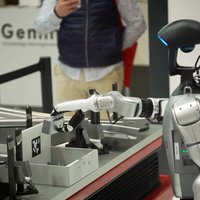
next step, to ensure traceability, we will not do it: a robot will do it. Micronic distributes the DNA to these tubes. The peculiarity of these tubes is that they have a two-dimensional code that is unique in the world. This is how we make sure that this blood sample that we originally had is in a precise tube without any defects.
The correct identification of samples is especially important if we consider that a single error can ruin several years of research.
The DNA is now ready to be stored, and a computer program will tell the scientist what the corresponding place in the repository is.
These large freezers are like safes that would be used to store money in a traditional bank. They store about 300 samples of native DNA and 500 samples of people with Alzheimer’s, Parkinson’s and Multiple Sclerosis for each disease. In addition, a new collection of DNA from 90 and over 100 years of age is being developed for research on ageing.
DNA lasts well below zero at 20 degrees. However, the Bank has a large freezer that keeps the samples at minus 80 degrees. The cells should be immersed in liquid nitrogen at 175 to 190 degrees below zero. If the electricity goes away, CO2 is supplied by a series of bullets until the current returns. In addition, in the case of the Bank’s own collection, the samples are duplicated and stored on special cards kept at room temperature. Thus, in the event of a fire or flood, there would be a safe copy of the work done for so many years.
But the main purpose of the DNA Bank is not to preserve genetic collections, but to encourage scientists to conduct their own research. The request is examined by two scientific and ethical committees and, if approved, it is granted to the scientist within fifteen days at a price of one euro per sample. In addition to being very economical for the scientist, it allows him to save a lot of time.
FOR THE TOTAL: Adrian Odriozola; DNA Bank
"When you want to conduct any research, you need samples before anything. And to collect samples, it often takes 3 to 5 years, because you have to take them from many places. The fact that the bank is here means that you just have to say what diseases and how many samples you need, and we can put them at your disposal."
Today, the Basque DNA Bank has grown so much that at the end of 2009 it will move to the new R&D construction that the University of the Basque Country is building in the Vitoria-Gasteiz campus. By then, it is expected that in addition to the DNA Bank, there will also be tissue banks that will ensure the safety and reliability of scientific research.
Buletina
Bidali zure helbide elektronikoa eta jaso asteroko buletina zure sarrera-ontzian