 Bilatzailea


Edible forest plants
Parsley, mint, rosemary... they are just some of the edible wild berries that we usually add to our dishes. But in the forests and fields of the area you can find many other edible flowers, leaves and roots.
The ethnobotanist Daniel Pérez Altamira is an expert in forest plants. Together with him, we visited the Listorreta Park to learn more about edible wild plants. In fact, our grandparents’ knowledge of wild plants is in danger of being lost.
NEREA ARCELUS; Elhuyar Foundation: When we talk about edible wild plants, what are we talking about?
DANIEL PEREZ ALTAMIRA; Aranzadi:We are talking about all potentially edible plants, including those that are poisonous but become edible after the necessary detoxification process.
The scientific society Aranzadi has already classified 3,500 edible species in the Basque Country, finding each of them in different types of fields.
In some cases it is possible to eat the whole plant, in others only the leaves or flowers.
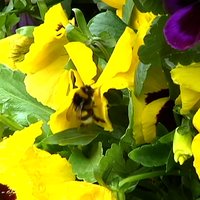
DANIEL PEREZ ALTAMIRA; Aranzadi: These others, these are beronics. These were known in our wild culture as Ataun’s pasmo grass. Flowers are edible leaves no more.
Ethnobotany is concerned with the role of plants in our culture.
In addition to studying the use of wild plants made in the past, the ethnobotanist investigates the possibility of extracting all edible properties from these natural resources.
DANIEL PÉREZ ALTAMIRA; Aranzadi:Trifolium belongs to the leguminous family, traditionally called the making of wine. It was taken from here and the nectar was absorbed. From here, take it from this part above and it's sweet.
Daniel Pérez Altamira; Aranzadi: What we usually do in research is to collect all these grasses when they are tender and extract protein and acid carbide to make them edible.
But in the face of this wide range of possibilities offered by nature, it is essential to be cautious. Ignorance could lead to eating wild plants that could be toxic. In addition to mucosal or abdominal irritation, ingestion by some toxic wild plants can lead to death.
DANIEL PEREZ ALTAMIRA; Aranzadi: It's the Arum italicum. This plant is one of the most poisonous. The good thing about this plant is that it burns your mouth as soon as you put it in your mouth and chew it. It is not like other plants, like amanita faloides, which warns you after 5 or 6 days, this immediately warns you of its danger.
NEREA ARCELUS; Elhuyar Foundation: The reaction is immediate.
DANIEL PEREZ ALTAMIRA; Aranzadi: Yes, but there is a detoxification process and what is commonly used for this is the root.
Through different detoxification processes, it is possible to transform toxic plants into edible
ones. Typical processes are soaking and cooking plants, but there are plants that require more complex processes. For example, protein denaturation or the use of ethyl alcohol are used to prevent the toxicity of wild type plants.
NEREA ARCELUS; Elhuyar Foundation: Would you like to receive some Asun and explain the detoxification process of them?
IN THE KITCHEN
We have approached the headquarters of the Aranzadi Science Association in San Sebastian to prepare the collected properties in the Listorreta Park.
DANIEL PEREZ ALTAMIRA; Aranzadi: After receiving the asun, there are two processes to make a asun omelet. Cooking is important in the detoxification process, the two toxins called stamina and acetylcholine are the ones that cause itching when bitten.
After 20 minutes of cooking by the harvested water, the removal of water from the softened leaf is essential to be able to add the egg. The toxins are removed by cooking and the wild plant is made edible. In addition
to tasting the properties of Asun in the tortilla, the cooked water can be used to liquefy the blood and lower cholesterol.
DANIEL PÉREZ ALTAMIRA; Aranzadi: Now we will execute the second part of the tortilla.
NEREA ARCELUS; Elhuyar Foundation: What does it consist of?
DANIEL PEREZ ALTAMIRA; Aranzadi: We’ll take the units and extract the proteins, vegetable fat and carbohydrates, separating them from the cellulose and liquinin that are more inedible. Thus, another type of tortilla is obtained.
Once the units have been liquefied and the juice extracted, the raw material obtained requires a processing called protein denaturation. By heating the juice of the Asun to 80 degrees, the liquid is coagulated and is already edible. All that remains is to remove the liquid that has not been coagulated and add the egg to the coagulated substance obtained.
What I saw was just one example. Through the course that explores the benefits of edible wild plants, Aranzadi wants us to be aware of the resource that nature offers us. The aim of the course is to promote the use of wild plants that were part of our gastronomic tradition.
Buletina
Bidali zure helbide elektronikoa eta jaso asteroko buletina zure sarrera-ontzian