 Bilatzailea


Pastures: more than grass
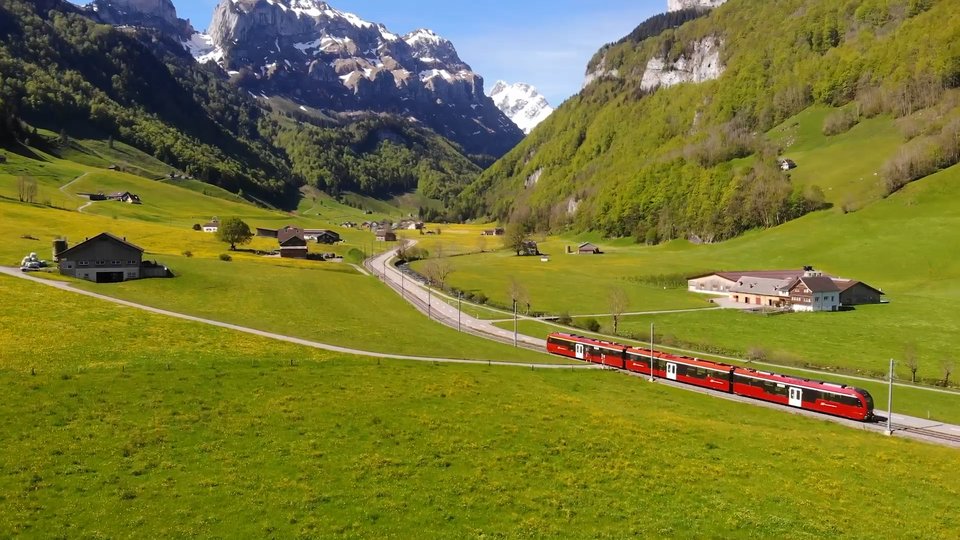
Pastures, meadows, meadows, meadows, meadows, meadows, meadows, meadows, meadows, meadows, meadows, meadows, meadows, meadows, meadows, meadows, meadows, meadows, meadows, meadows, meadows, meadows, meadows, meadows, meadows, meadows, meadows, meadows, meadows, meadows, meadows, meadows, meadows, meadows, meadows, meadows, meadows. They are a consequence of human influence, and although they have often been underestimated, studies are showing that they are essential for biodiversity, the environment and human well-being. We have talked about the importance and situation of these ecosystems with the experts Arantza Aldezabal Roteta and Pablo Manzano Baena.
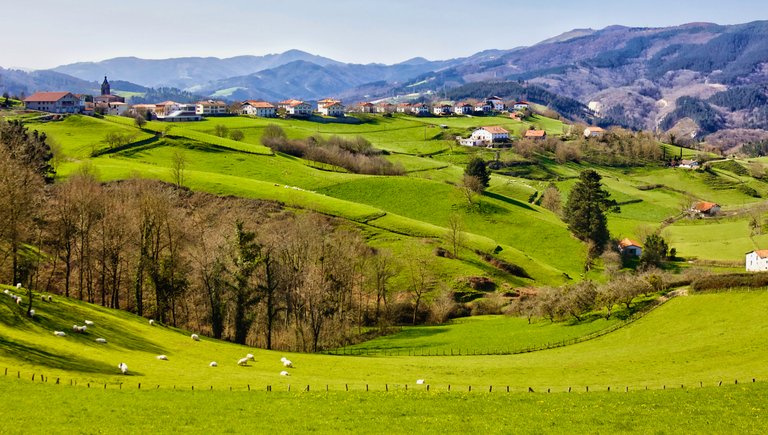
Where for the most part there is only grass, the one who knows how to look sees much more. “We bend down and realize that there are a lot of species that coexist there and that diversity is really striking,” says Arantza Aldezabal Roteta, researcher at the UPV. When he gets up and looks to the future, however, Aldezabal goes from fascination to despair: “At the moment, while the grasslands that remain are quite good, the prediction we make is deplorable. They are maintained because there is a farmer or a shepherd there, but if that is lost, we will certainly lose the meadows.”
“We have a lot of work to socialize the importance of pastures,” he warns. And he knows what he’s talking about, because Aldezabal has many years of experience researching grasslands and meadows. His team focuses its research on those related to the extensive exploitation of Latxa sheep and beef cattle. In some of the meadows of the shepherd’s farmhouses with Latxa sheep, up to 15-20 plant species are found in an area of 100 m2, and in Navarra, in the Sakana area, more than 50 species have been found. “We are now looking at what factors condition these levels of diversity and what makes diversity smaller or greater,” explains Aldezabal. Among other things, they are observing the diversity of microorganisms underground. “We want to understand this relationship between the underground and the surface in the best possible way.”
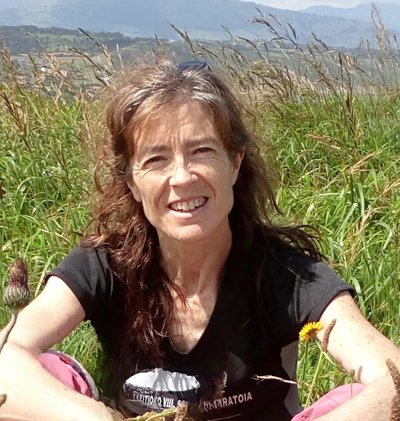
Researcher and professor of the Department of Plant Biology and Ecology of the UPV/EHU.
On the other hand, in order to analyze the situation and evolution of the grasslands in the best possible way, an attempt is being made to identify with satellite images the management of the grasslands, whether or not they are cut, the area that has been left to cut, etc. “There are thousands and thousands of small privately owned meadows in the Basque Country,” says Aldezabal. “The area occupied by meadows in the Basque Country is surely poorly calculated. And with the resources we have, it's impossible to really know how much grassland is being lost. The trend is clear, but we don’t know how fast it’s happening.”
“They are maintained because there is a farmer or a shepherd there, but if that is lost, we will certainly lose the meadows.”
The situation of the meadows is changing very rapidly, especially in the Atlantic region. “If you stop grazing or cutting for two or three years, you will develop a scrub. And little by little the robledal or the hayedo will come, or perhaps they will plant eucalyptus or false acacia thinking that it is more profitable.”
From the grass to the forest
If human activity ceases, the forest replaces the grassland. And you might think that this is the most desirable ecological situation. After all, most pastures are semi-natural ecosystems (in the Pyrenees they are natural at altitudes of more than 2,200-2,300 m) that are maintained due to an artificial influence. But that doesn’t mean the forest is always better. “The intensive management and massive exploitation of forests in the Basque Country has resulted in a drastic reduction of the native natural forest. And it is true that we must insist on the recovery and importance of these natural forests. But another question is whether natural forest is the best option everywhere. I don’t fully share that idea. If we allow a natural forest to advance in its dynamics, that forest will dominate the entire area, and a well-managed mosaic of landscapes offers us much more biodiversity.”
And it's not just biodiversity. “We get a lot of other ecosystem services that we wouldn’t otherwise get. Also food, which is very important if we think about food sovereignty. A natural forest would not feed us and everything would have to be brought from the outside or limited to a few areas and the system of intensive exploitation that would be applied in these areas.”
“While forest-friendly ideas are more widespread, studies have shown that grasslands play a more important role than previously thought.”
Studies comparing tree-dominated valleys with those with landscape mosaics have shown that where there is a landscape mosaic there is better water regulation, among other things because the trees need a lot of water. Even in the face of the climate, the forests are usually darker, have less albedo and therefore absorb more heat. And carbon storage can also be higher in grasslands than in forests. “While forest-friendly ideas are more widespread, studies have shown that grasslands play a more important role than previously thought and may in some cases be more effective than the forest itself.”
This idea is fully shared by Pablo Manzano Baena, Ikerbasque researcher at BC3: “The pastures have been very undervalued, we have started to value them now, when they are in danger and we are losing them.”
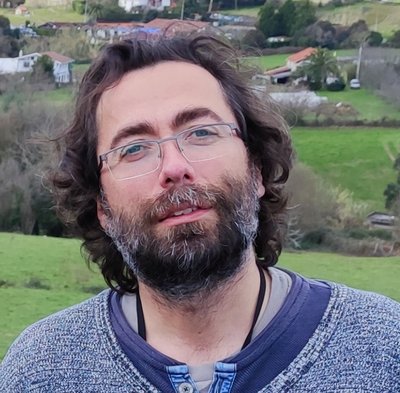
Researcher Ikerbasque from the Basque Centre for Climate Change - BC3.
Ancient pastures
In addition, grasslands have not always been dependent on human activity. “In the last 15 million years, grasslands have dominated the continents,” explains Manzano. The large herbivores made the landscapes very open and adapted to these conditions a large number of plants, insects and all kinds of life. “In the last 60,000 years, however, the animals that maintained these ecosystems have disappeared. In Europe, for example, we have been without elephants for 40,000 years. And who has kept these passions since then? Well, humans. At first, the hunter-gatherers, who opened up the landscape a lot, so that there were more herbivores. And then the shepherds.”
In fact, a study by Manzano and colleagues suggests that the biomass of wild herbivores that existed before human influence was significant was the same size as that of today’s cattle. That is, the cattle have replaced the wild herbivores of yesteryear. “Now most of the biomass of herbivores grazing in ecosystems is cattle,” says Manzano. “Extensive grazing or livestock farming, in addition to its potential economic and social importance, is a key part of the ecological balance of the planet.”
If done properly, livestock farming can have many positive ecological impacts. As already mentioned, it increases biodiversity and has a positive impact on the climate emergency. On the other hand, it also generates soil. “Manure is a miracle that creates even where there was no soil,” says Manzano. It also benefits pollinators and seed dispersion. The latter was studied by Manzano in his doctoral thesis: “In transhumance, a flock of a thousand heads scatters about 300 million seeds.”
Protection against fires
According to both experts, they are also essential to prevent the accumulation of excessive amounts of fuel in the mountains. Manzano is clear that the main cause of the recent fires is there and is angry that no one talks about it: “The left says it’s climate change and the right now that nothing can be done on the mountain; it’s neither one nor the other, the problem is that the greatest loss of herbivores in evolutionary history is happening. If ecosystems are producing biomass and it is not eaten, it is evident that this biomass will accumulate as if it were a powder store. The result is the fires that are happening. The evidence is complete.”
“Maintaining and recovering the grasslands would be the best measure that could be taken to fight fires.”
“In addition to the obvious issue of biomass, there is another important issue: that herbivores create mosaics in the vegetation,” he adds. “And when there are these changes in the vegetation, the fires, even if they were created, would be less severe.” Thus, for Manzano, the maintenance and recovery of the pastures would be the best possible measure to combat fires.
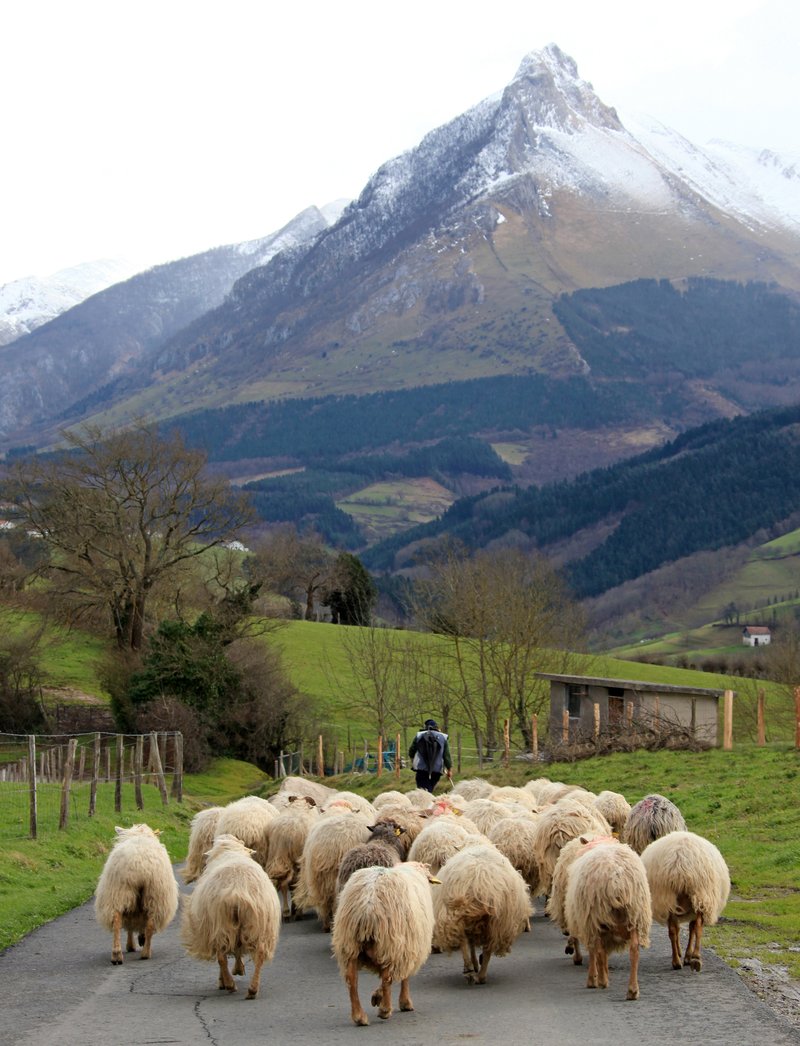
ARG: txakel/Shutterstock.com
“Traditionally, livestock keeps the mountain clean,” says Aldezabal. “Keeping the mountain mechanically clean is the most absurd thing that could be done. Sometimes you have to do it at first, but if it is not followed by a grazing it is useless, because in two years this scrub will develop completely and with more force. They are really perennial plants, with rhizomes in the subsoil and all the mechanisms to regenerate them. If you don’t take the cattle to this area for grazing, mechanically cleaning them is simply spending oil and constantly polluting them in an absurd dynamic.”
An opportunity for sustainable food
The replacement of machinery by livestock, in addition to being much more efficient and with all the environmental and climate change benefits, generates food in parallel. “Pastures have a lot to offer in food sustainability,” says Manzano. In fact, according to their own calculations, extensive and well-managed livestock could achieve a sustainable production of meat equivalent to that currently produced.
Manzano sees it more easily than with agriculture: “It is clear that sustainable agriculture without doping with the Haber-Bosch system could not feed the world.” Haber-Bosch is a system for producing fertilizers from nitrogen in the air. It requires a lot of energy, so a lot of fossil fuels are used for it. “We are eating fossil energy,” Manzano summarizes.
Intensive farms have the same problem, since the feed of these animals is produced from agriculture generated by the same system, and in most cases very far from the farms. “We know it can be done differently and we also know that we don’t need to eat so much milk and meat. It can be done in a sustainable way. With agriculture, this is much more difficult. Therefore, a more systemic reflection is necessary. And there the pastures have a lot to offer, and I think we should talk a lot about that next year.”
The United Nations has designated 2026 as the International Year of Pastures and Pastoralists. They underline the global importance of extensive grassland and livestock, noting that sustainable grassland management is key to achieving the Sustainable Development Goals, particularly in terms of poverty eradication, food security and climate action.
“Poverty has many causes, but one of them is malnutrition. Half of Africa’s population is stunted by malnutrition,” says Manzano. “Better livestock management could lead to better nutrition. But in addition, livestock farming is carried out on marginal lands that do not have agricultural production capacity. So, in many parts of the world, it’s their main path to economic development.”
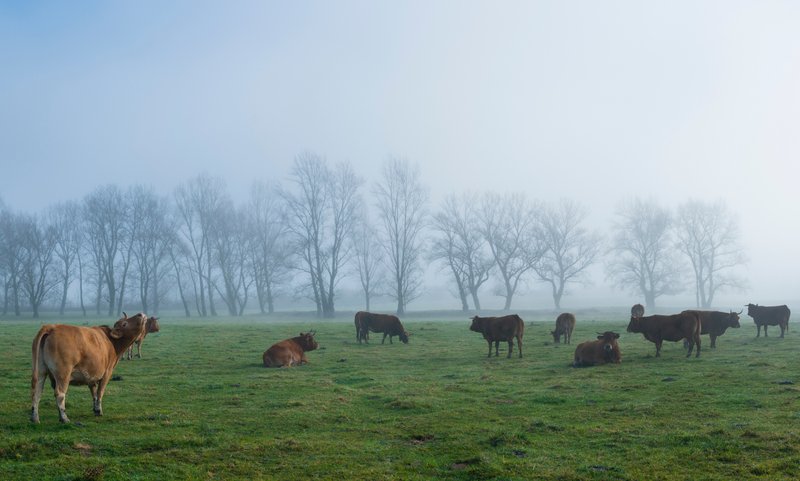
ED: Juan Carlos Muñoz/Shutterstock.com
Need for protection
Thus, the International Year proclaims the need to strengthen conservation policies and ensure that livestock activity remains viable.
“There is potential; there are young people who want to be pastors, ranchers and farmers.”
“We need to make politicians and society understand how important the roles these communities play,” Aldezabal says. "We should look for suitable work models and ensure decent living conditions for people who want to continue in this profession. There is potential, there are young people who want to be pastors, ranchers and farmers, but from the political and administrative point of view we are not putting the right conditions for these young people to enter the primary sector and live a dignified life. We have to make a real commitment on the part of the administration.”
“All the structures we have to promote generational relief are based on the fact that the children of pastors follow, which is absurd,” says Manzano. “The chip should be changed: farmers are entrepreneurs for the administration, but in fact they are service providers. And they must be offered decent conditions.”
Meanwhile, Aldezabal sees the future of the pastures in black. “The ones we have in the Basque Country, in general, are in a pretty optimal situation, the problem is that they are losing. And the truth is that I find the conservation of these meadows and meadows rather obscure today. As we have said, there is a direct relationship between the survival of these meadows and human activity. And if there is no change, as the extensive systems of the primary sector disappear, we will lose these grasslands.”
Manzano is more optimistic, although he recognizes that most of the environment is not. “Fires, for example, are putting us in our place, as well as the loss of biodiversity; but fires are burning our homes directly. I therefore believe that we will have no choice but to begin to assess these systems. The question is when, but in the end the apple will grow and fall.”
Buletina
Bidali zure helbide elektronikoa eta jaso asteroko buletina zure sarrera-ontzian