 Bilatzailea


Without people’s involvement, there is no transition to a new energy model
The UPV/EHU researcher Itxaro Latasa has been working on issues related to the energy transition for years. It looks at the issue from the point of view of spatial planning, but has always focused on sustainability and citizen participation. The conflicts that arise around renewable energies are based on the lack of territorial planning, since the decisions are made by large energy companies, leaving aside the voice of the citizens.
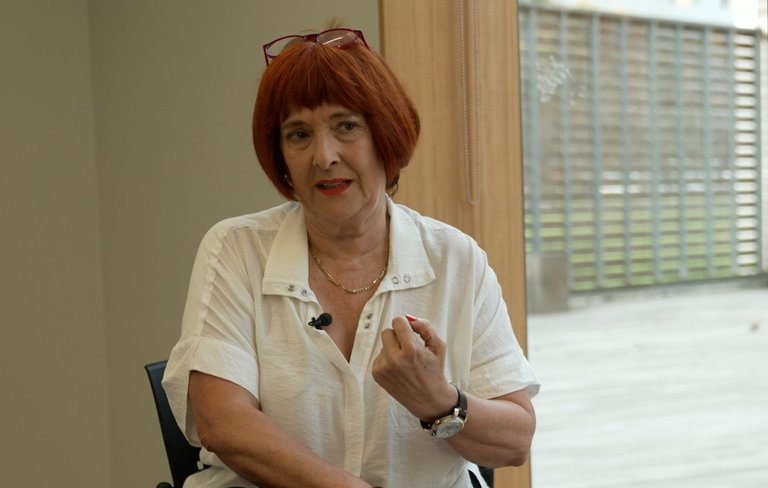
We are presenting the energy transition in society as a tool to combat climate change. Is it so?
Yes, that's right. It is true that the situation we are experiencing clearly shows the magnitude of the problem, that is, climate change. And it is also true that the energy transition is an essential tool for the solution. Yes or yes, we must reduce the consumption of fossil fuels.
Eliminate fossil energy sources and replace them with renewable ones. Is it as simple as that?
It's not that simple. Replacing is not enough. Inevitable, but not enough. A complete change of model is required. That is, how we consume, but in all areas. Not just in energy.
Let's talk about our consumption. What is the current consumption model?
The current model is a wasteful model. We're wasting energy. Are all the clothes we produce necessary? And is it necessary to produce these garments so many kilometers away?
Then these clothes end up like waste. Today, we know several Eastern European states where these wastes are used to heat homes. This shows us to what extent the model is wasteful. It needs to be changed.
Change but to what? Which model should we go to?
To a much more sensible model, where we use as little fossil energy as possible. This on the one hand. But there is another very important change: we have to change the very concept of energy.
Now it's energy business, pure business. There are companies that are aware of the truth and obtain a millionaire return. This concept of energy needs to be changed. From now on, in the transition, energy will be a resource that the entire world has the right to possess. It calls for the democratization of energy.
But that also brings another change: decisions. From now on, decisions on energy (production, transport, consumption...) will not be in the hands of a few companies, but of all. That's the change of model. We have already mentioned that the phenomenon of the energy transition is a phenomenon with many vertices or faces. But perhaps the most important of all these vertices is the economic one.
Now, do these companies that control fossil sources control the energy transition?
It's sad, but unfortunately it is. And it's logical. Spain is now a world power in the production of renewable energy. More than half of the energy consumed comes from renewable sources. In five years' time, the target could have been to go from 50% to 80%. Think about what this requires: installing much more power. That's where the industries come in, because they've found a niche.
And who do you think energy generation should depend on?
The new energy production, which comes from renewables, should be in everyone’s hands. Yes, large companies should be involved, because they produce a lot of energy for companies. But there must also be what is called a "distributed" energy distribution or model. That is, a system with millions of small producers who will consume them themselves. The model must therefore combine large production industries with small producers.
I don’t know if energy communities for self-consumption are small effective steps in the change towards this new model. Is that the way?
That's the way, and that's the only way. But that requires the involvement of the people. Without the involvement of people, there is no transition to this new form of energy. That is, there are two main conditions for the transition to take place in a real and complete way: one is to plan well in advance and the second is to participate.
Let us address the issue of renewable energy. Does the weather condition the efficiency of renewable energies?
Oh, yeah. Yeah. Although the new battery systems and intelligent energy distribution networks have advanced a lot, it is time that conditions the production of renewable energies the most. But if we talk about efficiency, weather is not the only factor that affects renewable energy systems: the location and orientation of the facilities, losses in energy transport, energy storage technologies and the amount of soil needed to locate the facilities are also very important factors to take into account. To talk about the efficiency of renewable energies, all of them must be taken into account.
We could think that renewable energies are ecological in themselves. Is it so?
Much more ecological than other types of energy. If it is ecological that does not harm the environment, in this sense, to the extent that they do not emit greenhouse gases, they are ecological. But they can also have damage.
By this I do not mean that they are harmful, but that this potential harm must be controlled in advance by good planning.
What damage are those?
For example, windmills. It is known that there have been a lot of problems with endangered animal species. Vultures and many other species collide against the walls of the mills. Batteries also pose problems: these facilities contain materials that are very dangerous for the environment. For example, lead, cadmium, lithium... They're very dangerous if they get into the system. Is the impact on the environment taken into account in the implementation of these facilities? In theory, yes, all the rules are aimed at this, but then, in reality, the law can easily be "skipped". That's the problem.
This impact is strongly influenced by the circularity of the materials. This has to be very much taken into account. What will be done at the end of the useful life of any installation that is installed? What will be done with this material? Be solar panel installations, wind installations, etc
It's still an unresolved problem. But we're on our way. I’m pretty positive in that sense. He's doing a lot of research. At the moment, not all materials can be recycled or reused, but this circularity must be achieved. They do a lot of research. It is logical, because this research will allow the creation of a strong industry. There's an economic interest behind it. But if it is something of social interest, it is not harmful. He's on the right track.
You're an expert in spatial planning, Itxaro. In this matter, what should be taken into account for an adequate planning of the territory?
The first thing I want to say is that at the moment there is no territorial planning, and that is why we live in chaos. In this planning, it is essential to take into account the vocation of each soil. That is, respect the most appropriate use for each soil. For example, if an area is flat, has very deep soil, is rich in minerals and is close to villages, they are ideal. But the ideals for what? Well, for agriculture. Create a nearby diet.
But what happens? These areas are very attractive and then it is precisely there that they implement renewable facilities. It cannot be, because you deprive this land of its vocation.
There are also public policies. How are they doing?
Public policies often have two levels: the oral – promises, promising, fascinating – and then what happens in reality. This planning must be done by public policies and powers, but it is not being done.
What is the role of citizens in all this?
The role of citizens is vital. First of all, because we have to change the very concept of energy, as I said before. Energy is a right for everyone, it has to be for everyone. Citizens must be part of the decisions, the decision cannot be left in the hands of these few companies. Therefore, the role of citizens is fundamental.
However, Itxaro, problems can begin when this transition is put into practice, right? Fears, misgivings, citizen obstacles
Yes, it's true. There will always be someone against all the infrastructure, highways and similar facilities. This is known from an English word: NIMBY "Not in my backyard." “Things can be done, but not near my home. Whatever you want, go far.”
That's it, but I wouldn't insist on that. We are people, and we have that tendency. But in this case, it is not the main problem. Here people oppose it because it has not been done in a fair way. They're right. They are opposed precisely because they have not participated in this planning. They are complaining.
And they complain that those impacts that I mentioned before are not controlled either. We have already mentioned planning, but not only planning in terms of spatial planning, but also the need for general planning.
Is there no future without it?
Without this there is no transition, the energy transition must be planned along with the other plans. That is, when you make a territorial planning, there are sectoral aspects such as transport, the primary sector... And all of them, which are sectoral, must be done at the same time and very connected, very related. How this energy transition will be integrated with the future of the territory, with its development.
In this planning, the key is to link territory, people and energy, always looking for the development of the territory, activities that benefit that territory, that structure the territory.
For example, clean transport. That is, sustainable transport. We see that in our territory the topography is very complex, there is not enough public transport. As a result, people have to move in private cars. In these cases, a better structuring of the territory is necessary so that there are resources for sustainable mobility. This planning will guarantee the future.
Buletina
Bidali zure helbide elektronikoa eta jaso asteroko buletina zure sarrera-ontzian