 Bilatzailea


Dictionary of ecosocial education
Journal of Ecosocial Education
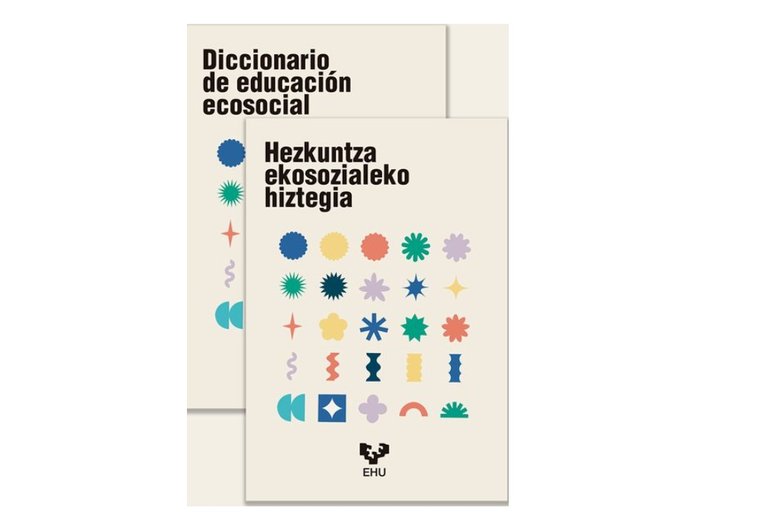
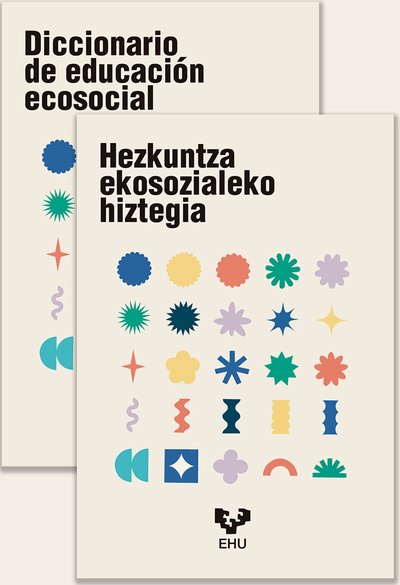
The publication of the Dictionary of Ecosocial Education by the University of the Basque Country has been a milestone in the conceptual systematization of an emerging and urgent field: education as an integral response to the ecosocial crisis of the Anthropocene. With the prologue of Iñaki Bárcena (Ekopol, UPV/EHU) and coordinated by Hezecoz (ECOSOCIAL EDUCATION, "Ecosocial Education"), a community of practices created in 2023, this work transcends the traditional lexicographic genre to become a tool for pedagogical and social transformation.
Process and structure of collaboration
The process of elaboration is as significant as the final product. Sixty people initially proposed 150 terms, of which 25 developed the final 70 concepts. The work follows a participatory process that reflects the epistemological principles that it defends: knowledge as a collective and localized construction. This collaborative methodology, together with the numerous professional language reviews and careful editorial design, guarantees academic rigor and accessibility.
Each entry presents a carefully designed architecture: definition of concepts, theoretical discussion, context in the Basque Country, contrasted educational resources in several languages, extensive bibliography and related terms. This structure transforms each term into a complete didactic unit to offer an integral pedagogical resource, overcoming the purely defining function.
Contents and interdisciplinary scope
The terminological selection shows a marked interdisciplinary balance. The natural concepts of ecological sciences (biodiversity, planetary boundaries, resilience) are accompanied by conceptions of critical political economy (degrowth, Capitalocene, greenwashing), philosophy and ethics (biocentrism, anthropocentrism, eco-social ethics), ecofeminist theories (ecofeminism, care, eco-feminist economics) or critical pedagogy (eco-literacy, eco-social education, education for degrowth).
It is especially useful to include terms that respond to the emotional aspect of the ecosocial crisis (solastalgia, eco-anxiety, anger), which is usually excluded in technocratic approaches to environmental education. Also noteworthy are the entries dedicated to alternative paradigms from the Global South (Buen Vivir /Vivir Bien, Chthuluceno, ecological debt), which decentralize the dominant Eurocentric approach.
Academic and pedagogical value
From an academic point of view, the work systematizes a field that did not have a consensual terminological framework and helps to legitimize this field as a field of study of its own. Each entry provides an updated status of the topic with bibliographies that include the most important international academic production. Conceptual rigour is not against accessibility: the definitions are clear, without falling into simplification.
One of the most strategic contributions is the explicit link with the curricular framework. The proposed eco-social concepts contribute to the development of the eight key competences established in the current regulatory framework. This curricular link counteracts the tendency to consider ecosocial education as a marginal project and presents it as a coherent and necessary development of the official curriculum itself.
The educational resources included provide practical starting points for various didactic applications, such as interdisciplinary projects, dialogic talks, simulation games, dilemmas, critical analysis of media, artistic creation, eco-social audits of schools and formative evaluation tools. This makes vocabulary a versatile and adaptable tool, from secondary education to university and permanent teacher training.
Political and transformative dimension
The dictionary does not hide its political character. From the beginning, the commitment to ecosocial transformation and denunciation of educational activities that perpetuate the anthropocentric educational system under the guise of innovation or sustainability is manifested. This epistemological honesty is refreshing compared to the neutral rhetoric that dominates much of the literature on "education for sustainable development."
Faced with reformist approaches, the work is critically positioned, offering radical alternative frameworks that go to the root of the problems. In times of crisis of civilization, education cannot be limited to incremental adjustments; its epistemological, ethical and political foundations must be rethought. This radicality is precisely the uniqueness and value of the proposal.
Final assessment
The dictionary of ecosocial education is a basic contribution that provides a rigorous, systematic and interdisciplinary conceptual framework for a field that has not had a consolidated theoretical corpus. Its relationship with the official curriculum, its practical resources and its adaptation to the local context make it a first-class pedagogical tool. In this historical moment of ecosocial crisis, this work reminds us that education cannot be neutral: either it reproduces the unsustainable system, or it commits to its transformation.
Recommendation
Highly recommended. Essential reference work for school libraries, educational faculties and teacher training.
Dictionary of Ecosocial Education
José Manuel Gutiérrez Bastida (ed.)
Bilbao: University of the Basque Country (UPV), 2025
Bilingual edition (Basque-Spanish), 300 pp.
Price: 28€
Buletina
Bidali zure helbide elektronikoa eta jaso asteroko buletina zure sarrera-ontzian