
 Bilatzailea


The geysers of Tatio
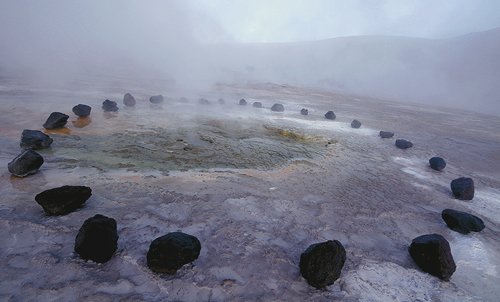
Today, there are about 1000 geysers in the world... 80 of them are located in Chile, in the Andes, at 4300 meters above sea level. These geysers form a geothermal field called “Geyseres del Tatio”.
Geysers are activated every day at dawn... early in the morning. Around 5:30 a.m., the water boiling underground begins to emerge in small jets. The outside temperature is always very cold, so due to the contrast of the hot water and the cold outside, huge fumaroles are formed. In just a few minutes, the entire geyser area is filled with columns of steam that are heading towards the sky.
The water leaves at a temperature of 85 degrees, creating small natural pools in some areas. They are thermal waters that people take advantage of to bathe.
The geyser area of Tatio is surrounded by mountains that reach a height of 6000 meters. One of these mountains is the Tatio Volcano, located 10 km from the area. Both the geysers and the volcano are part of a larger volcanic area called Puna. This area covers an area of 50,000 km2 and reaches Bolivia. The volcano Tatio has not erupted in the last 10,000 years, but the volcanic area of Puna is still active under the surface of the earth and that is why geysers are formed.
The geysers expel rainwater and snow water. The water is filtered from the ground 20 km from the Tatio area. This water flows through a fault system until it reaches some of the reservoirs that are underground. When the water is collected in the reservoirs, it begins to warm up due to the heat of the magmatic rocks. The reservoir is filled and, finally, the hot water rises by convection through a series of natural pipes that reach the surface of the earth... that’s when the geysers are formed.
When the subterranean reservoirs expel the excess water, the pressure decreases and the geysers stop. The show lasts about an hour and a half. The calm will last until the next day.
Buletina
Bidali zure helbide elektronikoa eta jaso asteroko buletina zure sarrera-ontzian