 Bilatzailea


Pamukkale, the cotton castle
In southwestern Turkey, in the valley of the Menderes River, there is a white and white hill that seems to be covered with snow: Pamukkale, Cotton Castle (in Turkish). This white castle is 160 meters high and 2,700 meters long. A total of 17 hot water sources emit 250 l of water at 35 to 100°C every second. The calcium carbonate dissolved in this water precipitates and the resulting trabertin gives the choline this white color.
Thick layers of travertine form vertical walls at some points, structures that look like frozen waterfalls at others, and even shallow terraces filled with water.
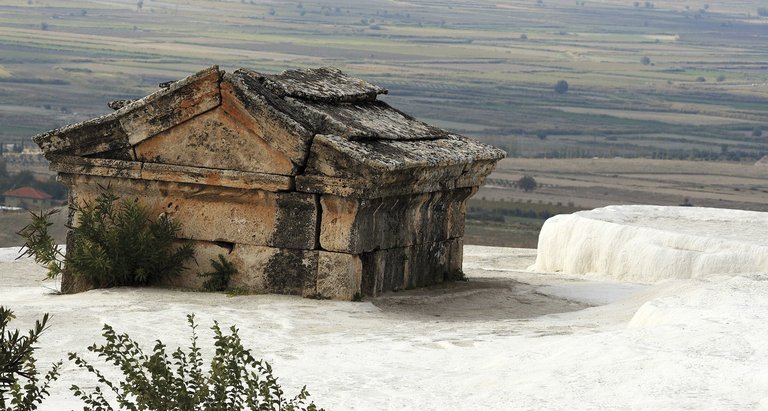
The Greeks considered the waters to be medicinal, and on the summit of Pamukkale they built the city of Hierapolis in 180 BC. Today you can visit the remains of that city, such as the necropolis, surrounded by white travertines.
By the end of the 20th century, tourism infrastructure had put Pamukkale at risk. Hotels were built, hot springs were diverted to them, a road was built... Many wells were dried up, and Pamukkale began to lose its whiteness. Aware of this, measures were taken to restore the beauty of the cotton castle, such as the collapse of hotels.
Buletina
Bidali zure helbide elektronikoa eta jaso asteroko buletina zure sarrera-ontzian