 Bilatzailea


Las Medulas: the power of gold
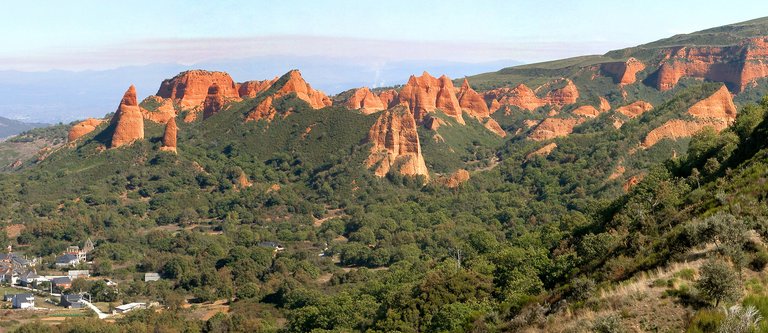
The area known as Las Medulas, south of the province of Leon, was the largest gold mine in the Roman Empire. This is what makes the area look special.
They used a technique called ‘Ruina montium’ to extract gold. First, they brought water to large reservoirs from the surrounding mountains through an extensive network of canals. This water was instantaneously introduced into the galleries built on the ground and the mountain, being of soft material, exploded due to the pressure of the water and the air trapped in the gallery. The soil thus loosened was washed with water, and gold was obtained.
This brutal gold exploitation lasted barely 200 years. And the grazing of later centuries has also ended, and the landscape has been naturalized. Today, it seems that the red peaks, almost 100 meters high, are typical.
These peaks are a land of red conglomerates that, in addition to gold, has silver, iron and borax, among others. The origin of these red conglomerates is unknown. The main theory is that they are sediments accumulated after the formation of the Bierzo sedimentary basin, but there are also indications that they are sediments transported to this place by a large river before the formation of the basin.
The mysterious geological origin, human history and the strange forms that have remained today give a special charm to Las Medulas. Perhaps that’s why it was declared a World Heritage Site by UNESCO.
Buletina
Bidali zure helbide elektronikoa eta jaso asteroko buletina zure sarrera-ontzian