 Bilatzailea


Cappadocia: a stone village
One of the most spectacular landscapes in the world is located in Turkey, in the historical territory of Cappadocia. Ravines, gorges and picturesque formations have given this area of central Anatolia a magical and unique touch.
Ten million years ago, volcanic ovens and dust covered the plain with a mineral called tufa. This mineral does not withstand the attacks of rain, changes in temperature and air well, which is why, over time, nature has shaped the area, forming incredible valleys, rare cone-shaped columns and an undescribable landscape.
One of the most striking endemic structures in Cappadocia are the “witch chimneys”. These volcanic monoliths are composed of hoppers at the bottom and basalt and andesite at the top. The tallest and most impressive ones reach a height of 40 meters. But when they lose the hat that protects them, they begin to dissolve.
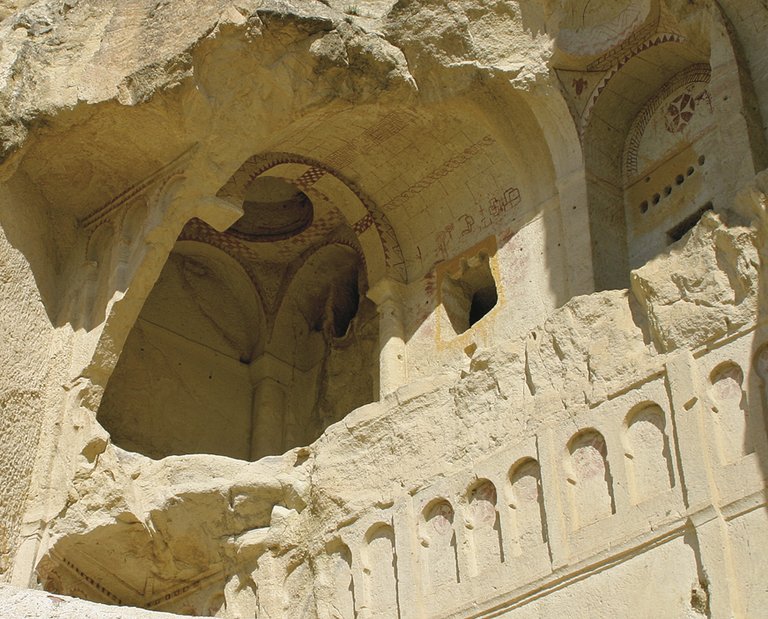
Man has also taken advantage of the natural caves and caves of this land. Christians, Hittites and Byzantines organized numerous monasteries, chapels and churches in the rocks. One of the most popular is the “Dark Church.” Thanks to the lack of light, the frescoes of the 10th and 11th centuries remain intact.
But the civilizations that inhabited Cappadocia did much more than take advantage of the natural caverns, which they dug with their own hands to create new rock spaces. They were able to do this thanks to the softness and adaptability of the rock formed by the tufa. Thus, the first Christians to arrive in Cappadocia fleeing the Arab invaders built about 37 cities in the 7th and 8th centuries. Some of them had the capacity to accommodate up to 10,000 people and were connected by very large labyrinths.
Buletina
Bidali zure helbide elektronikoa eta jaso asteroko buletina zure sarrera-ontzian